

Precision Through Deep Drilling: How ELE’s Four-Dimensional Sensing System Overcomes the “Blind Spot Challenge” in Rock Drilling Operations
Intelligent Tunneling
The Sensing Revolution
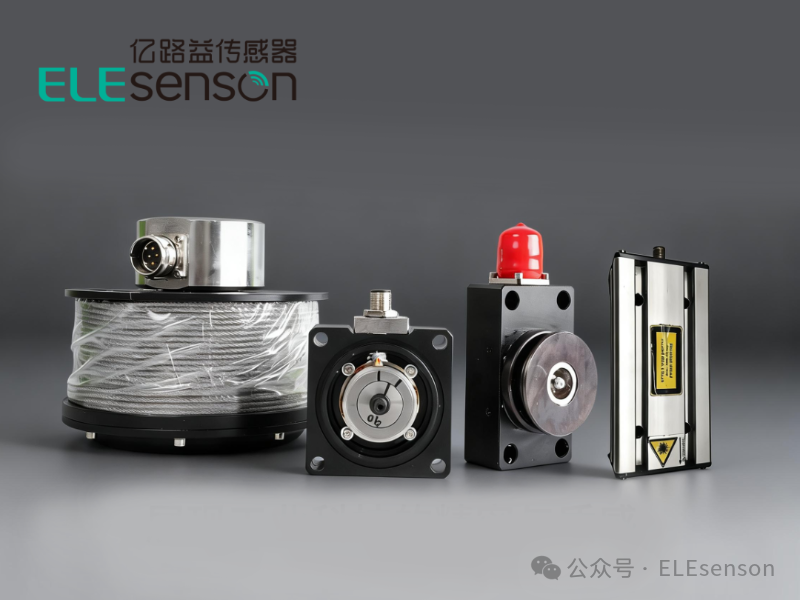
ELE proudly introduces its specialized sensor kit for rock drills: angle, depth, extension, and laser positioning—ensuring drilling operations hit the mark every time.
In projects such as mine tunneling, tunnel excavation, and foundation pit anchoring, the accuracy of drilling, depth control, and positioning efficiency directly impact costs and safety. Traditional methods that rely on manual experience or rudimentary measurement techniques often face three major challenges:
Significant deviations in hole positioning, which affect blasting results or anchor installation;
Inaccurate depth control, leading to over-excavation or under-excavation and resulting in material waste;
Difficulty in monitoring the drilling process, making it impossible to track drilling status in real time.
To address these challenges, ELE has launched four new smart sensors specifically designed for rock drills—angle sensors, depth sensors, extension sensors, and laser positioning sensors—which together form a “full-sensing” drilling assistance system, enabling standard rock drills to be quickly upgraded into digital equipment.
Angle sensor
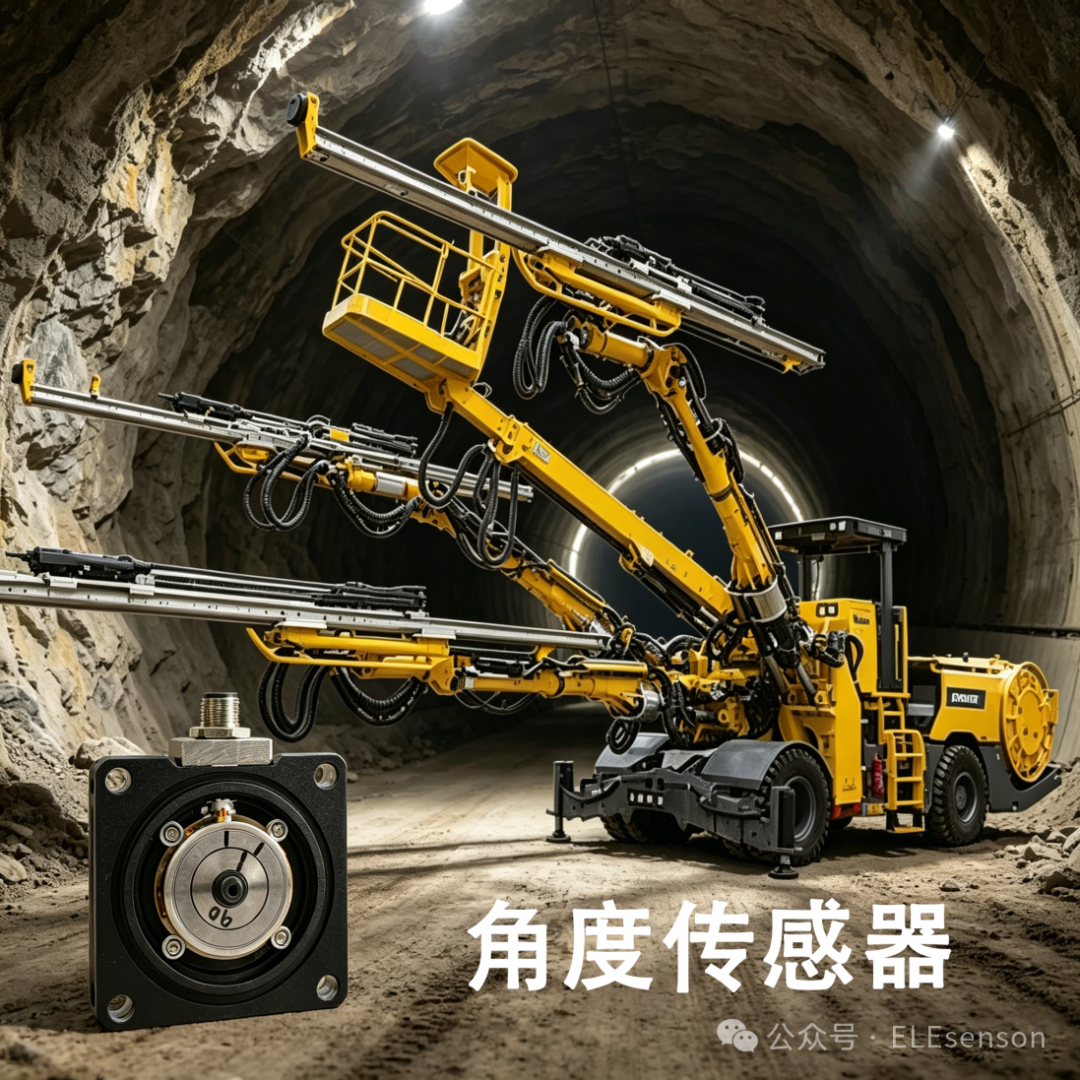
Based on MEMS (Micro-Electro-Mechanical Systems) three-axis accelerometers and gyroscopes, and utilizing a Kalman filter algorithm, this system outputs the Euler angles (roll, pitch, and yaw) of the drill boom or advance beam relative to the absolute horizontal plane and heading angle. The output interfaces support industrial bus protocols such as CANopen, RS485 (Modbus RTU), and 4–20 mA.
Real-time monitoring of the horizontal angle, pitch angle, and roll angle of the drill boom or propulsion beam. Ensures that the drilling angle matches the design value, preventing hole deviation.
Depth sensor
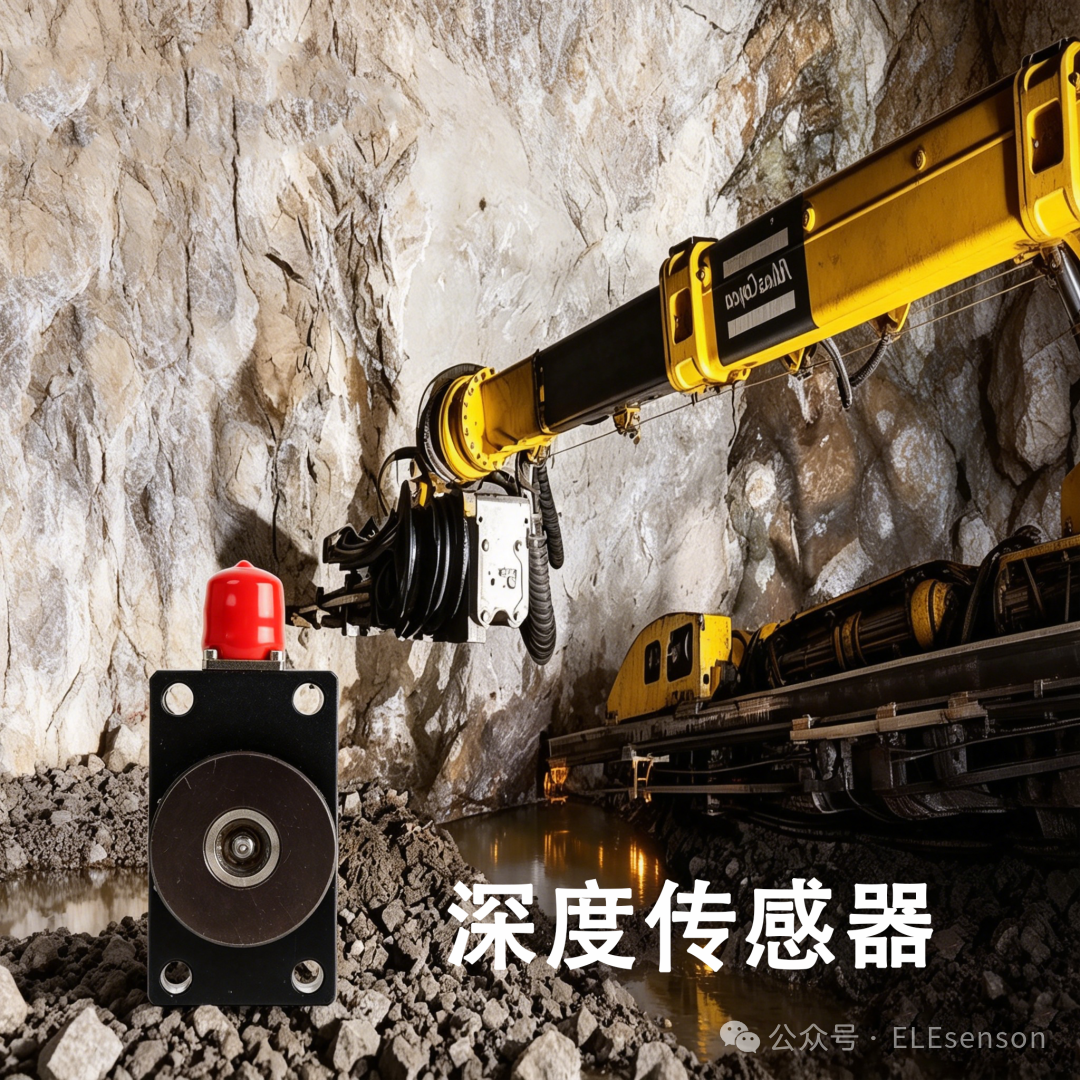
This solution combines a magnetostrictive displacement sensor or a high-resolution incremental encoder with mechanical limit switches. It measures the absolute displacement of the drive beam using either non-contact or contact methods, with a resolution of up to 0.5 mm. The sensor is mounted directly on the drive cylinder or the chain drive sprocket and features built-in temperature compensation and signal conditioning.
Features built-in dual redundant outputs (for safety certification) and supports wire break detection. Measurement range covers 0–6 m (expandable to 10 m), with linearity ≤ ±0.05% FS.
Extension/Tension Sensor
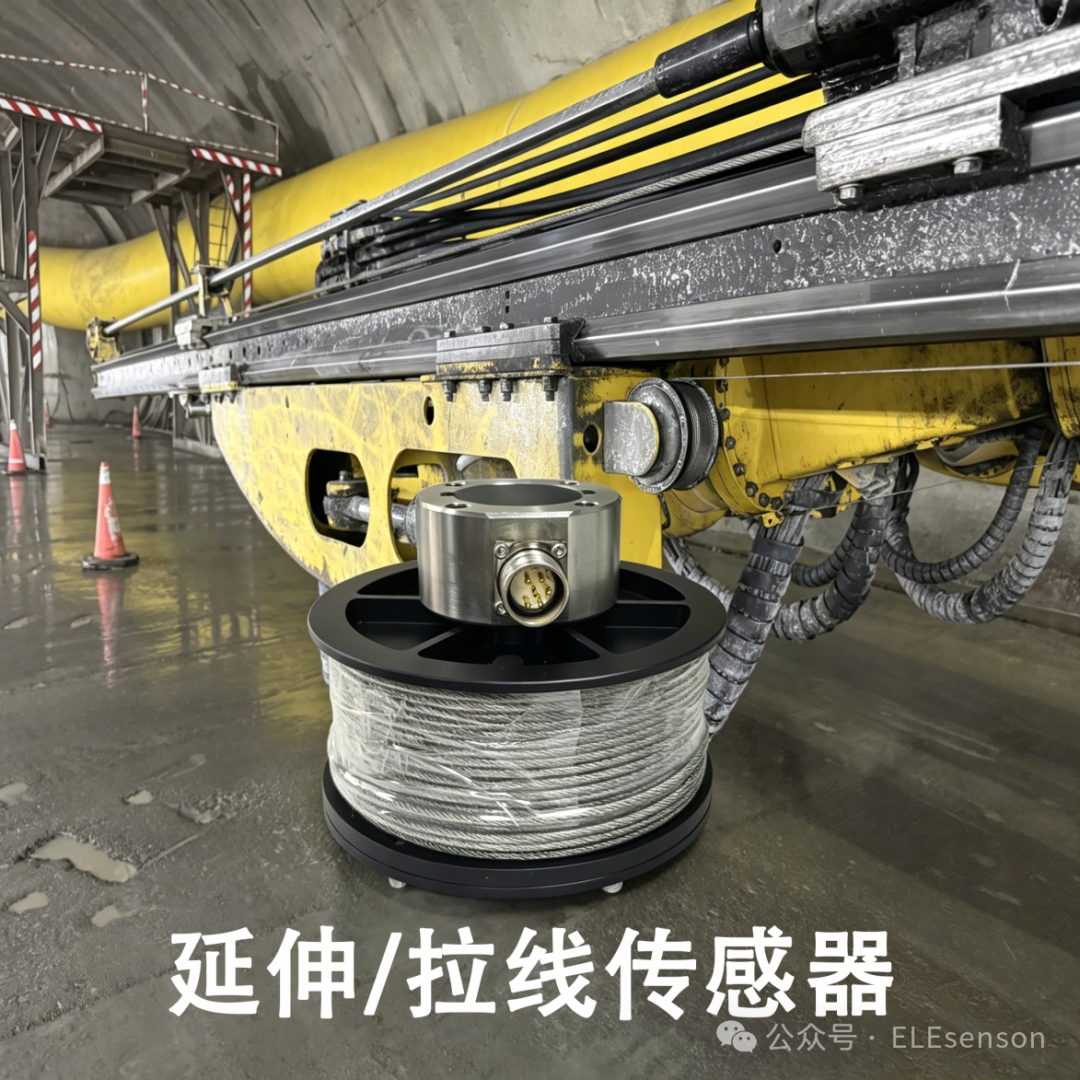
For rock drills equipped with telescoping feed beams or folding drill arms, the total feed length is not equal to the cylinder stroke. The ELE extension sensor uses a draw-wire encoder or a laser distance measurement module to directly measure the actual extension length of the frontmost drill rod guide frame relative to the rear pivot point. The output value is combined with data from the depth sensor. Due to mechanical clearance and elastic deformation between the sections of the telescoping beam, relying solely on cylinder stroke conversion can result in a cumulative error of 1–3 cm.
When the drill rig uses extension rods or splices, the extension sensor identifies the current boom configuration and automatically switches the depth calculation model. This reduces the deviation in the final hole position for long-hole drilling (hole depth > 10 m) from 5–8 cm to within 2 cm, making it particularly suitable for large-span tunnel pipe arches or horizontal core drilling.
Laser Positioning Sensor
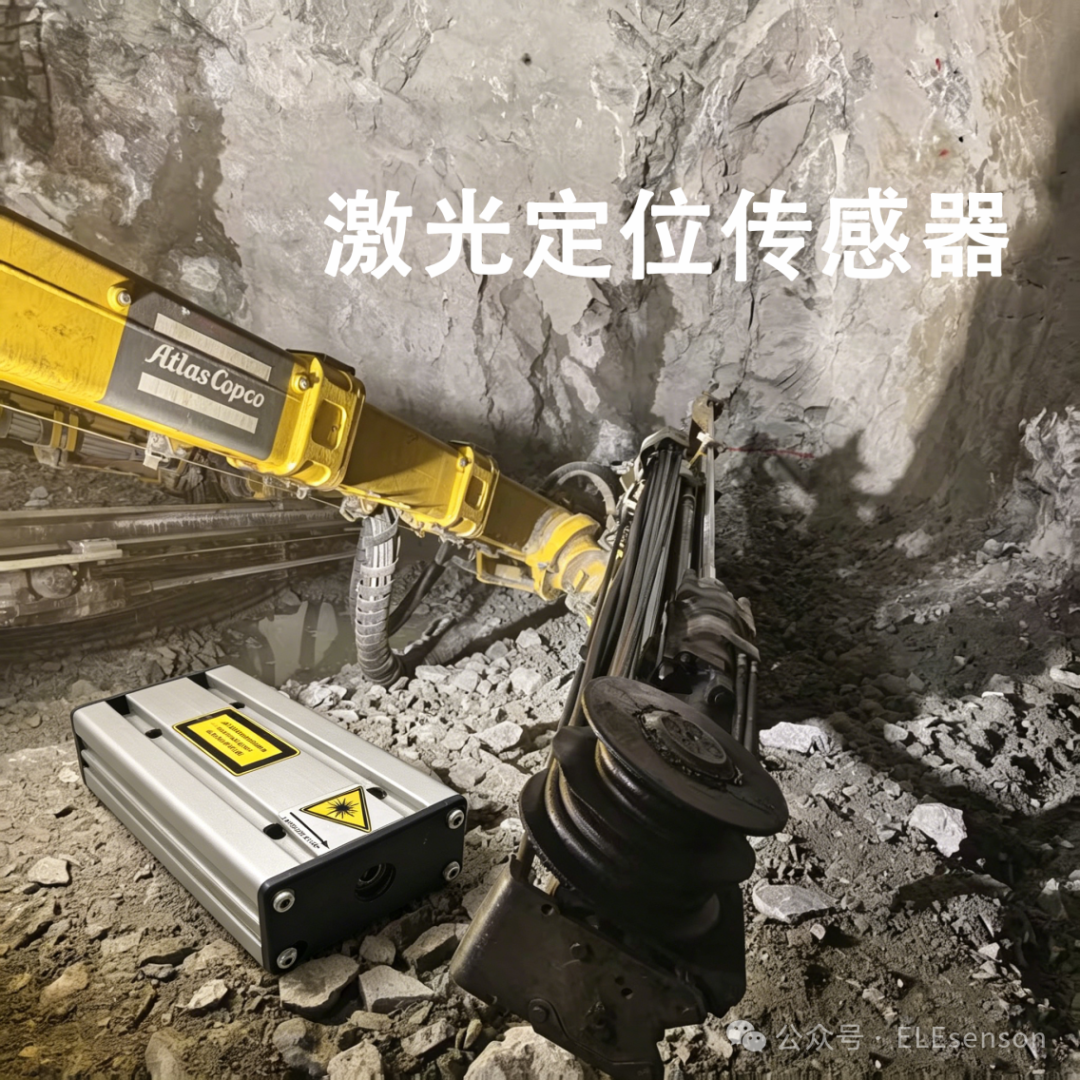
Unlike simple laser pointers, this product integrates a crosshair/dot laser module with a coaxial image sensor. During operation, the laser is projected onto the face of the tunnel, and the operator aligns the laser dot or crosshair with the designated drilling position; the sensor analyzes the actual projection offset through image processing and outputs the deviation value (in mm) via CAN bus, guiding the drill arm to make automatic or manual fine adjustments.
Poor lighting and high levels of water mist inside tunnels render ordinary laser alignment marks invisible. Yiluyi employs a green laser (520 nm) with a power of ≤5 mW, which remains clearly visible even under 2000 lux ambient light and features a pulsed mode to enhance visibility.
Installing a single sensor yields limited results; the true advantage of the ELE four-piece set lies in data fusion and integrated contr
Transforming rock drills from “power tools” into “precision robots”

elesenson
ELEsenson is a company specializing in the research, development, production, and sales of sensor technology, located in Wenzhou, Zhejiang, China. Upholding the corporate philosophy of “striving for perfection and pursuing excellence,” the company is committed to providing precise and reliable sensor solutions to customers worldwide. The company boasts an experienced R&D team dedicated to the research and development of cutting-edge sensor technologies. ELEsenon not only prioritizes product quality but also places a strong emphasis on customer needs. Production strictly adheres to international quality management system standards, ensuring that every product meets or exceeds customer expectations. Moving forward, Zhejiang ELEsenon will continue to pursue technological innovation and uphold the principle of quality first, striving to become a global leader in the sensor industry and providing customers with superior products and attentive service.