

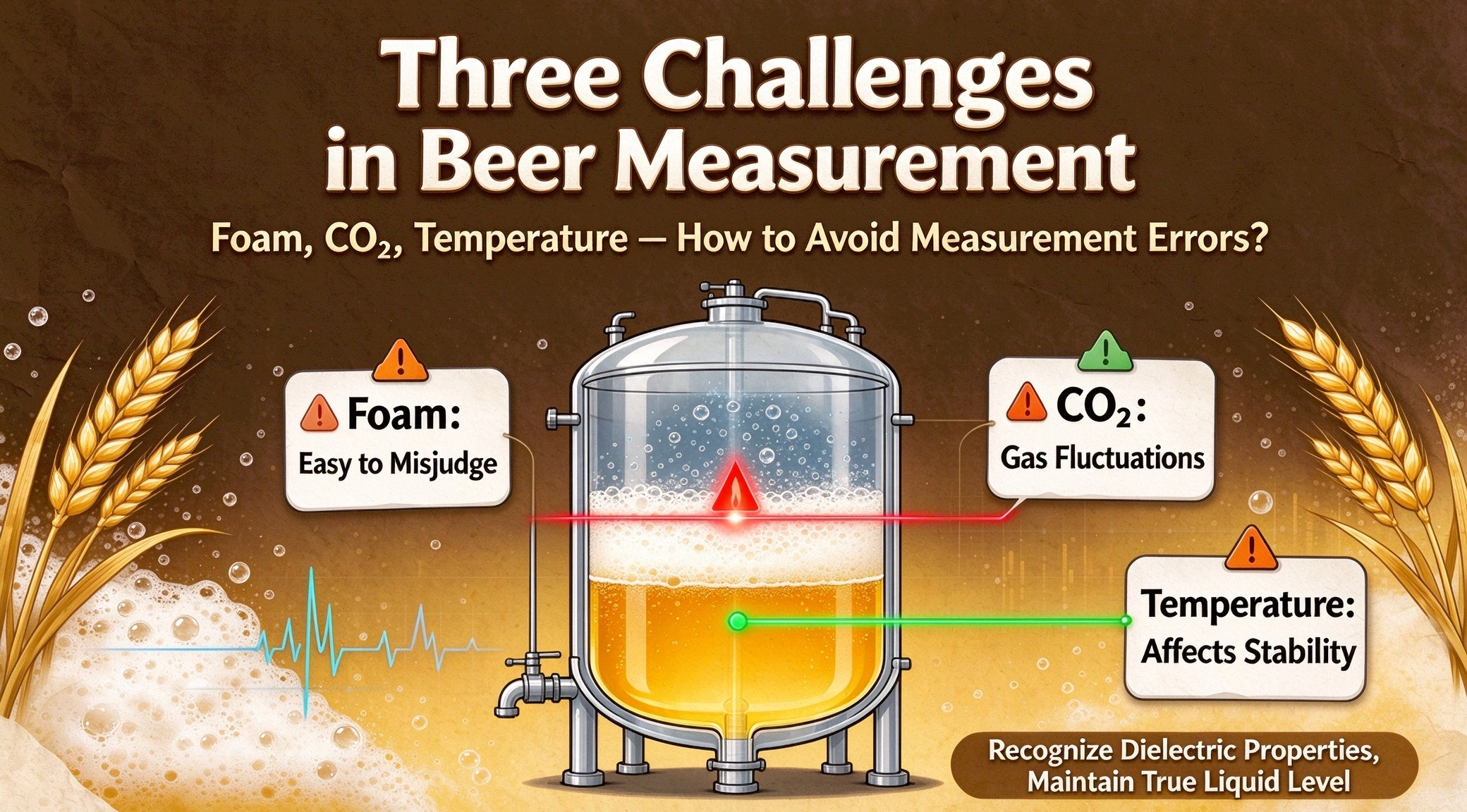
When Foam Mimics Liquid Surface: How Brewing Processes Avoid False Level Measurement Risks
Beer production may seem simple: malt goes in, beer comes out. But anyone who has managed production knows that level measurement can be a real headache.
Foam, temperature fluctuations, air pressure, dust, strict hygiene requirements — every stage brings its own challenges. Traditional level gauges often fail here, delivering inconsistent or unreliable readings.
Today we break down the five major pain points in level measurement for breweries, and how ELEsenson Swept-Frequency Admittance Level Sensors solve them one by one. We will explain the working principle and calculate the real economic value.
Pain Point 1: Foam Interference — The “Boy Who Cried Wolf” Problem
Foam is unavoidable in beer production. Boiling during mashing creates foam, and the foam layer can reach half a meter thick during peak fermentation in fermenters.
Ordinary capacitive and tuning-fork level transmitters get confused by foam, mistaking it for liquid and triggering frequent high-level alarms. Operators rush to check at first, but after dozens of false alarms, the alerts lose credibility.
When an actual tank overflow finally happens, nobody takes the alarm seriously. Thousands of liters of beer spill out, costing tens of thousands in losses.
Swept-frequency admittance solution:
ELEsenson swept-frequency sensors do not rely on readings from a single point. Instead, they scan across a full frequency spectrum to identify resonance peaks. Foam is a gas-liquid mixture with dielectric properties completely different from pure liquid; its resonance peak shape, position and intensity are distinct. The algorithm accurately distinguishes foam from genuine liquid level and eliminates misreading.
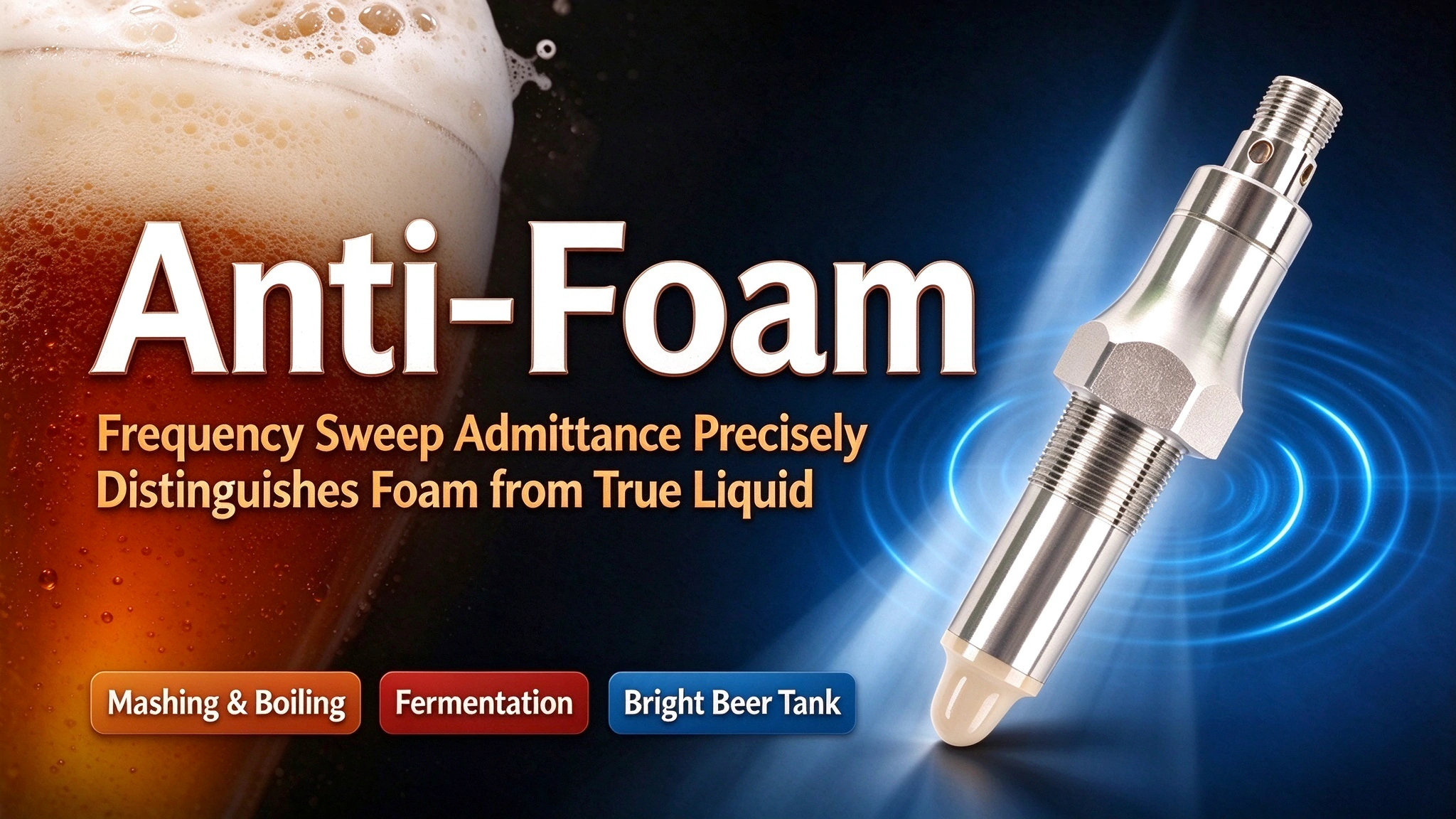 Business benefits:Tank overflow losses are eliminated. A single tank of beer is worth tens of thousands; preventing one incident a year pays for the sensor. Reliable alarms remove the need for repeated tank climbing inspections and improve site safety.
Pain Point 2: Wide Temperature Variations — Readings Drift Wildly from 100°C Boiling to 0°C Cold Storage
Brewery tanks operate across a huge temperature range. Mashing kettles reach 100°C during boiling, bright beer tanks cool down to 0~4°C, and fermenters run at 8~15°C.
Many level instruments suffer severe temperature drift: readings for the same liquid level change between summer and winter, between hot and cold tanks, even morning and afternoon. Operators must rely on experience to estimate true levels, with constant manual adjustment leading to heavy workload and errors.
High-temperature swept-frequency admittance solution:
ELEsenson high-temperature swept-frequency admittance sensors feature ultra-low temperature drift design, maintaining stable measurements across the full temperature range of -20°C to 120°C. Temperature changes cause minor shifts in resonance peak position, which the algorithm tracks and automatically compensates for, so final level outputs remain unaffected.
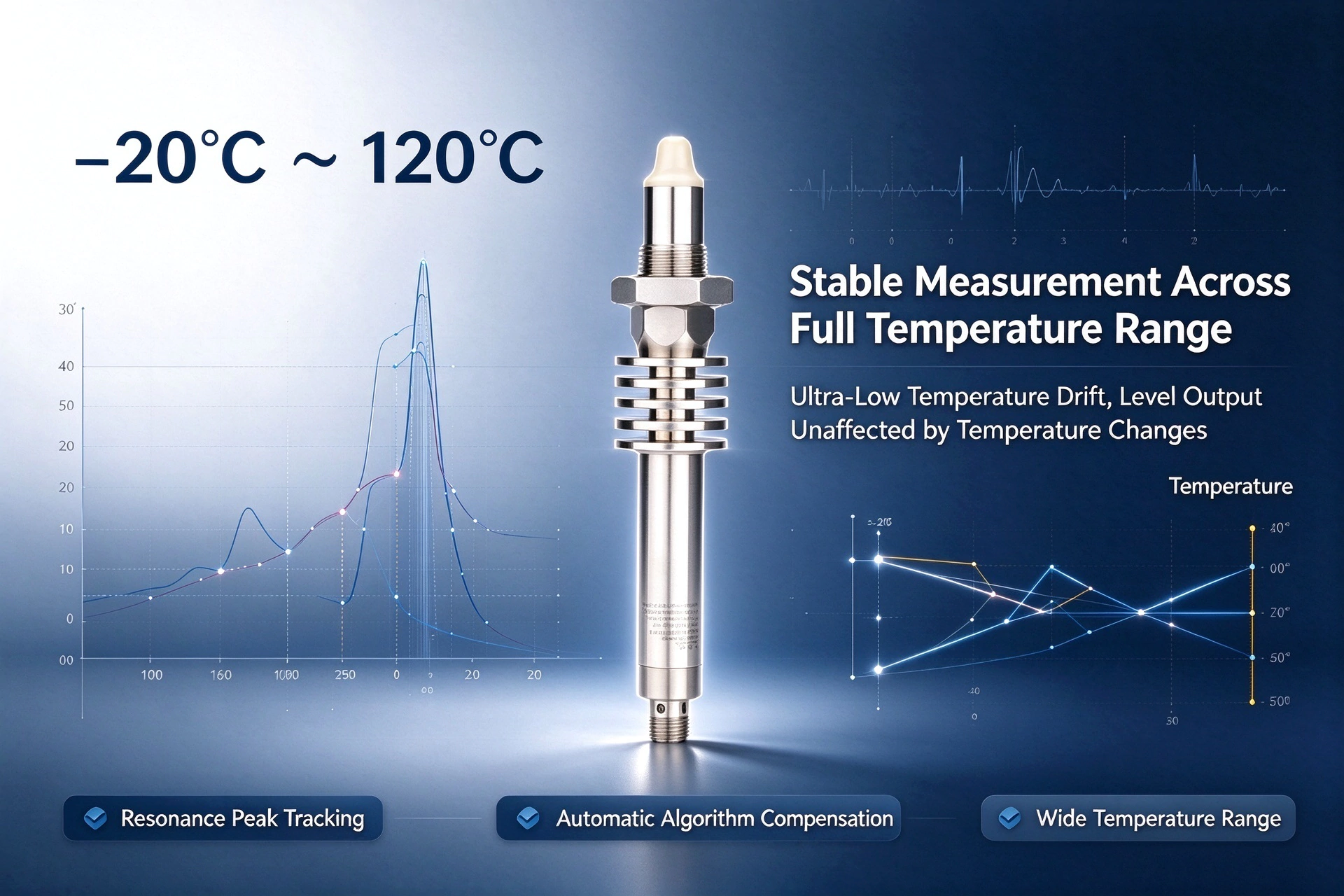 Business benefits: One sensor model works for both hot and cold tanks across the production line. No need to select different instruments for different vessels. Fewer spare parts, less operator training and simplified maintenance create substantial long-term savings.
Pain Point 3: CO₂ Backpressure — Readings Fluctuate During Fermentation
During fermentation, yeast consumes sugars to produce alcohol and CO₂, building variable backpressure inside tanks.
Some level measurement principles are pressure-sensitive: pressure changes alter dielectric constants and skew readings. Mid-fermentation, the measured liquid level may suddenly jump tens of centimeters, leaving teams unsure whether the tank is genuinely full or if pressure created a false signal.
ELEsenson swept-frequency admittance solution:
CO₂ gas has an extremely low dielectric constant and barely impacts swept-frequency measurement. Tank pressure changes only modify gas density, with negligible effect on dielectric properties. The swept-frequency sensor measures dielectric characteristics of the material between the probe and tank wall; gas pressure variations do not interfere with results.
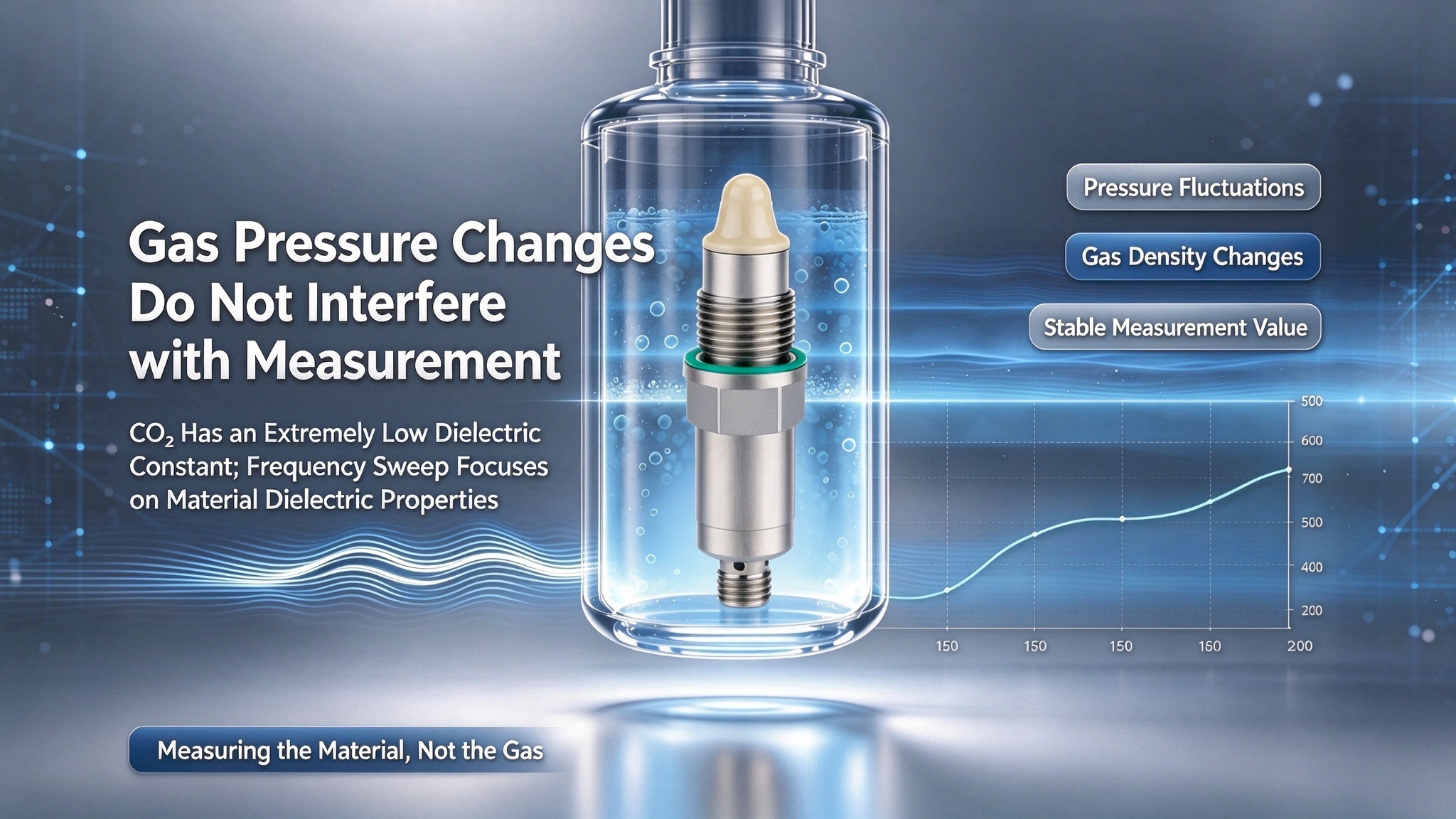 Business benefits:Trustworthy level data throughout fermentation enables precise yield calculation and full traceability of process parameters. When fermentation issues occur, historical data supports root-cause analysis instead of guesswork.
Pain Point 4: Installation Constraints — Crowded Tank Tops Leave Limited Mounting Space
Tank tops on fermenters and bright beer tanks are usually packed with equipment: manholes, CIP spray balls, breather valves, pressure gauges, temperature probes, leaving little room for level instruments.
Retrofits on older plants are even trickier. Existing tank openings have fixed sizes and positions. Replacing sensors often requires tank modification and new drilling, which is labor-intensive and disrupts production.
Swept-frequency admittance solution:
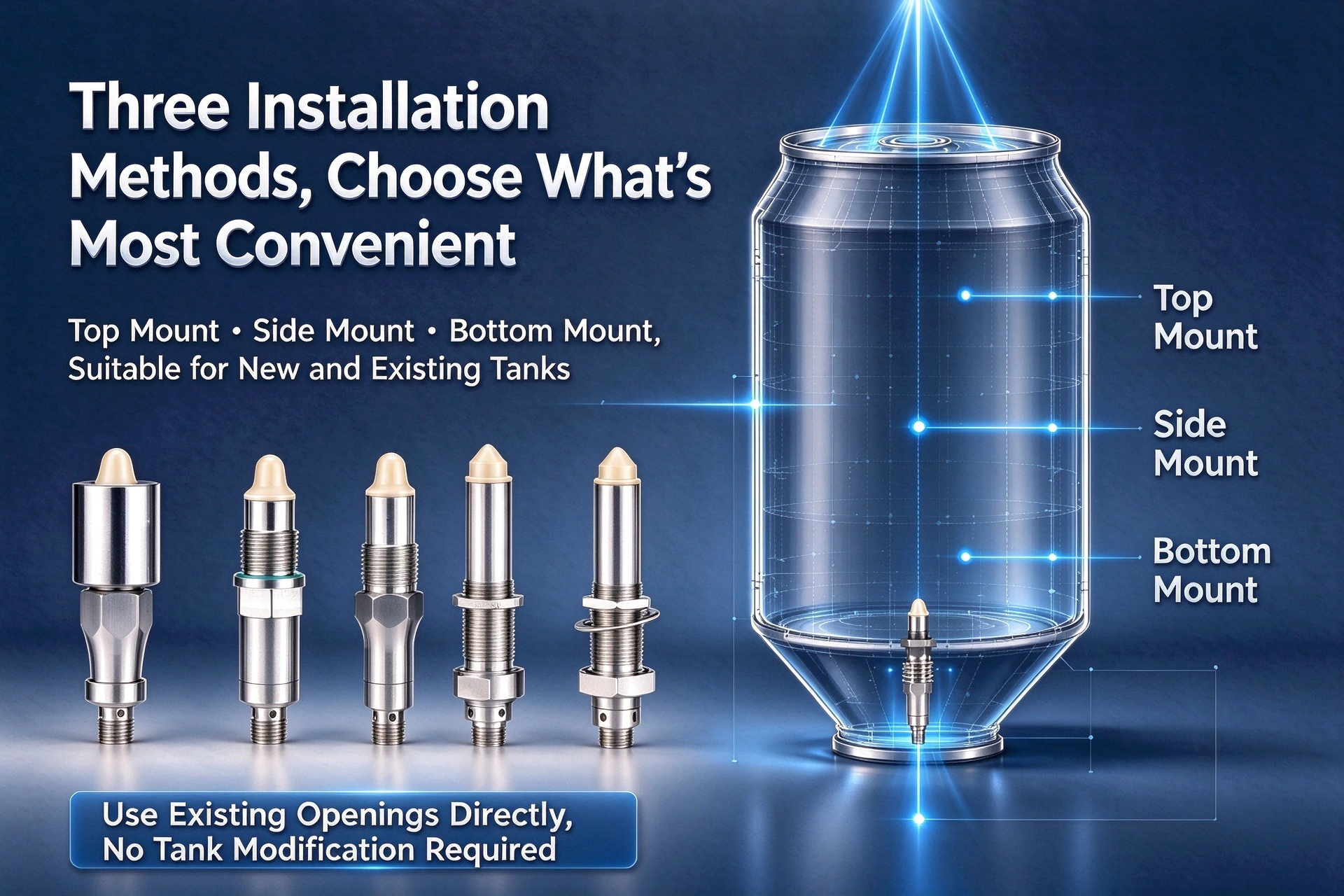
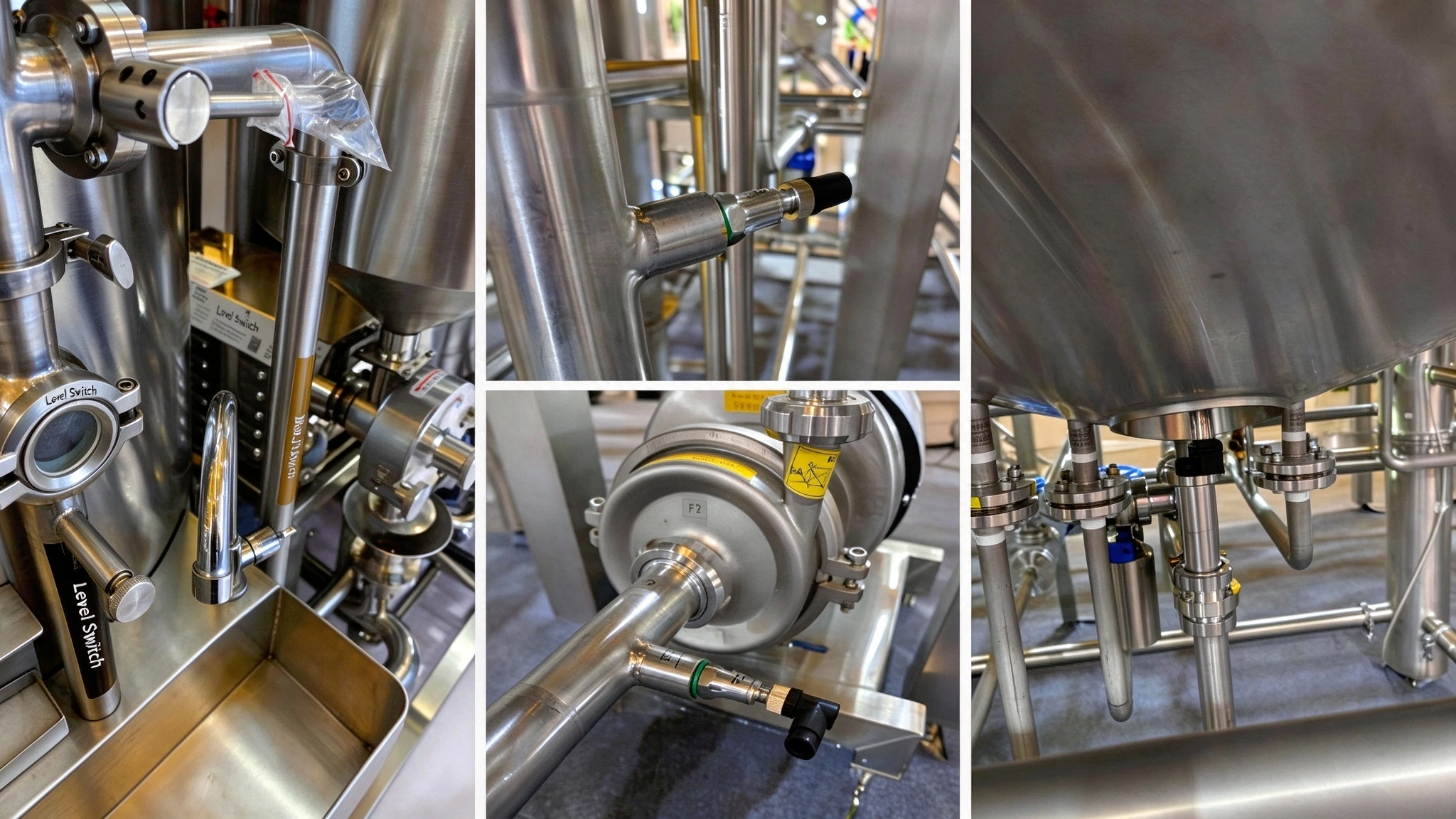
ELEsenson swept-frequency admittance sensors support three mounting configurations: top, side and bottom, for maximum installation flexibility.
• Top mount: standard choice when tank top space is available.
• Side mount: angled insertion from upper tank wall if the top is congested.
• Bottom mount: installed through the conical tank base when bottom space permits.
Existing tank openings can be reused without tank modification. Installation can be finished within one day, with commissioning completed in half a day.
 Business benefits: Compatible with both new and retrofitted tanks. No production shutdown required for tank modifications. Low installation cost, fast commissioning, ready for use the same day.
Pain Point 5: Strict Hygiene Requirements — Food Contact Compliance & No Disassembly During Cleaning
Hygiene is a non-negotiable red line in the food industry. Product-wetted components must meet food-contact standards, have smooth, crevice-free surfaces and allow thorough cleaning.
Some level instruments feature complex structures with crevices that trap residues. Others fail food-contact material certifications, or require removal for every CIP cleaning cycle — raising labor costs and contamination risks.
Swept-frequency admittance solution:
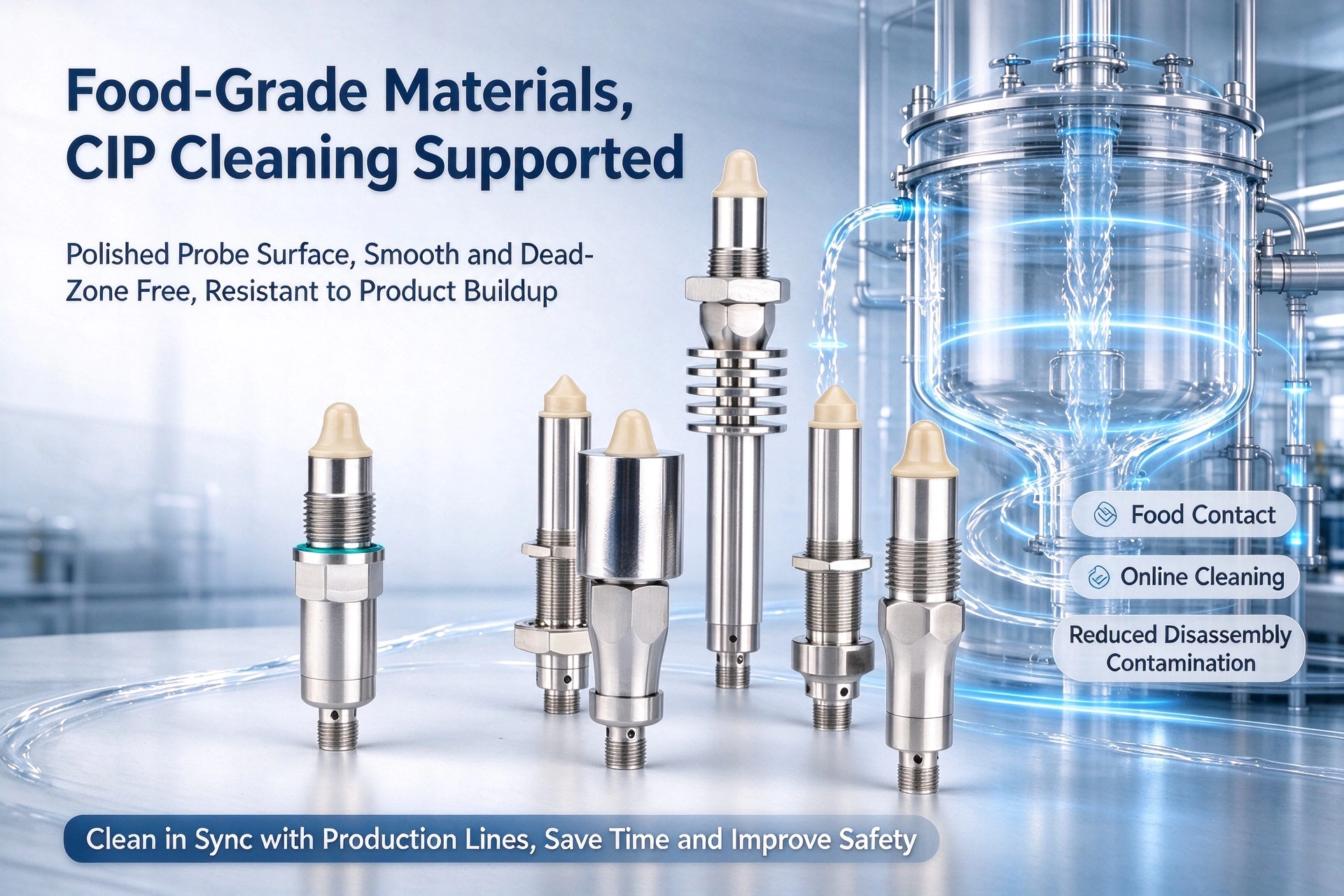
Wetted parts of ELEsenson swept-frequency admittance sensors use food-grade materials meeting food contact requirements. Polished probe surfaces are smooth, crevice-free and resist product buildup. Sensors stay in place during full-line CIP cleaning; no disassembly is needed, saving labor and eliminating contamination risks from repeated removal and refitting.
 Business benefits:Pass audits and factory inspections smoothly, removing level instrumentation as a compliance risk. Higher cleaning efficiency accumulates significant time savings over repeated CIP cycles. Food safety protection safeguards brand reputation.
Many breweries only look at upfront purchase cost when selecting level instruments, assuming cheaper is better. But when calculating total cost of ownership, low-cost options often prove far more expensive.
❌ Costs of conventional level instruments:
• Tank overflow losses: tens of thousands per incident; one major overflow per year is costly
• Labor cost: operators climbing tanks for inspections and repeated calibration
• Maintenance cost: multiple models across the plant requiring large spare part inventories
• Quality risk: inaccurate level → filling deviations → customer complaints or failed inspections
• Safety hazard: frequent tank climbing exposes staff to fall risks
✅ Savings with ELEsenson Swept-Frequency Admittance Sensors:
• Eliminate tank overflow: savings ranging from tens of thousands to hundreds of thousands annually
• Reduce labor: reliable alarms remove routine tank-top inspections
• Unified model: one instrument type for the whole line, cutting spare part inventory by half
• Stable product quality: high filling accuracy reduces customer complaints
• Improved safety: fewer high-altitude operations lower accident risk
Level measurement may appear minor, yet it impacts efficiency, safety and quality across the entire production line. Accurate measurement equals cost savings.

elesenson
ELEsenson is a company specializing in the research, development, production, and sales of sensor technology, located in Wenzhou, Zhejiang, China. Upholding the corporate philosophy of “striving for perfection and pursuing excellence,” the company is committed to providing precise and reliable sensor solutions to customers worldwide. The company boasts an experienced R&D team dedicated to the research and development of cutting-edge sensor technologies. ELEsenon not only prioritizes product quality but also places a strong emphasis on customer needs. Production strictly adheres to international quality management system standards, ensuring that every product meets or exceeds customer expectations. Moving forward, Zhejiang ELEsenon will continue to pursue technological innovation and uphold the principle of quality first, striving to become a global leader in the sensor industry and providing customers with superior products and attentive service.