Withstand Extreme Heat: Reliable Level Measurement for High-Temperature Processes
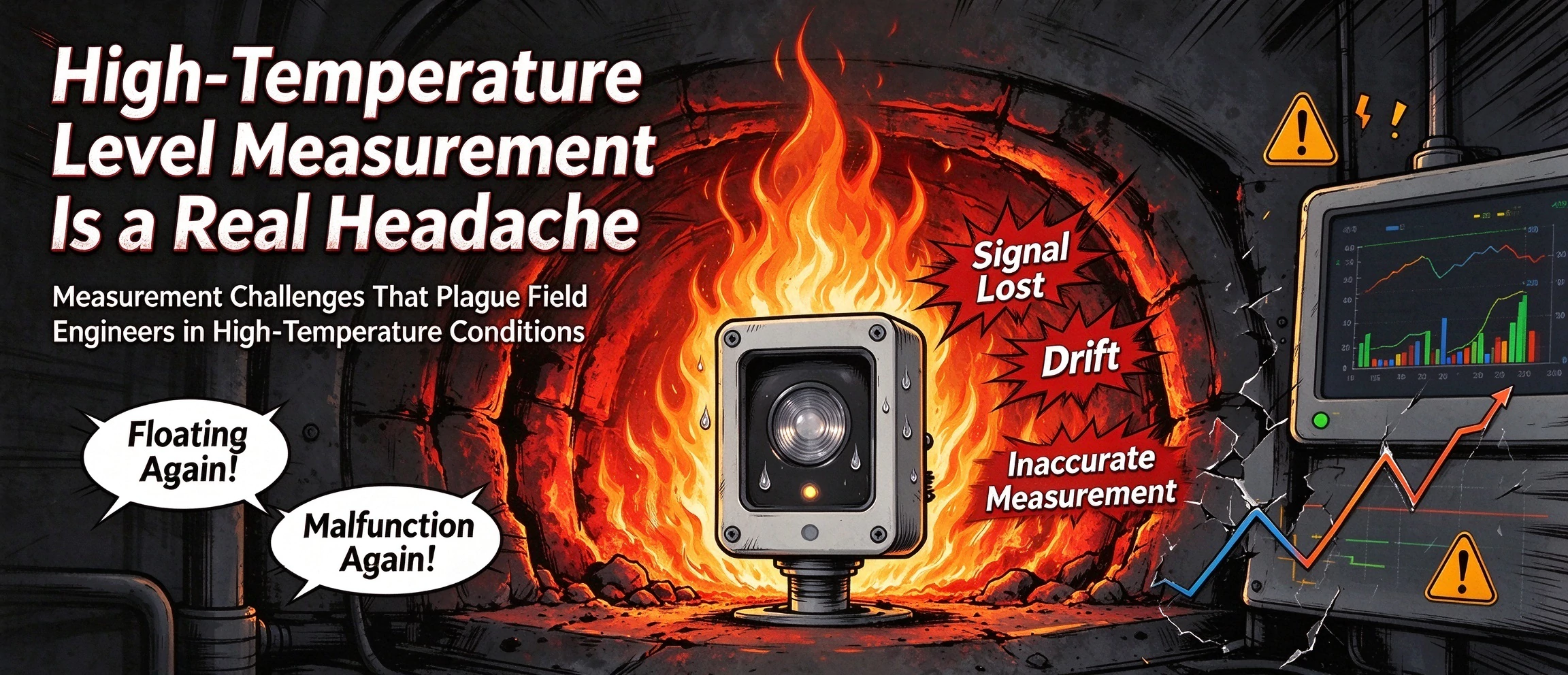
High-temperature applications are among the trickiest scenarios for industrial level measurement. At several hundred degrees Celsius, conventional sensors suffer signal drift, malfunction and short service life. Operators often rely on manual sampling or empirical estimation — inaccurate and risky.
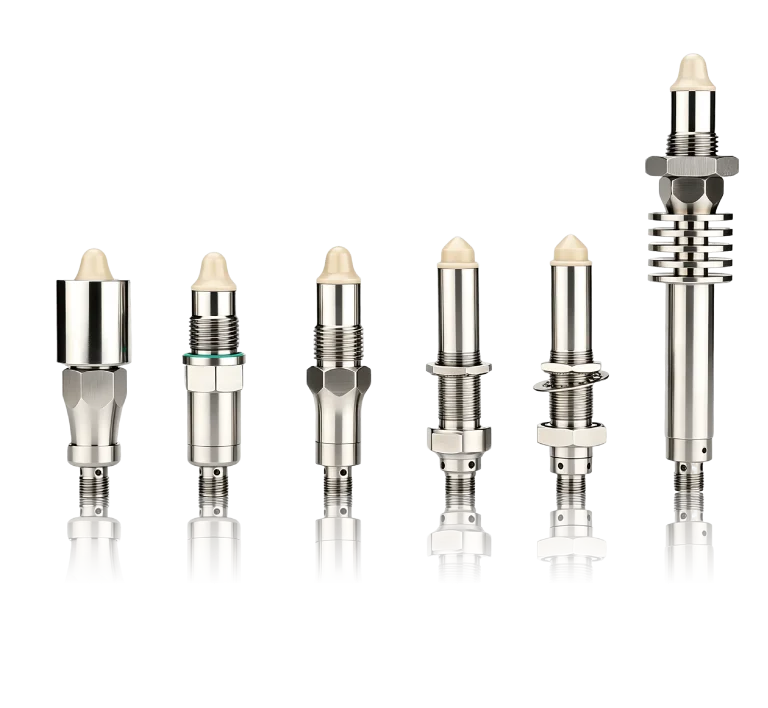
This article introduces ELEsenson high-temperature swept-frequency admittance level sensor, engineered for high-heat environments. It reliably operates from 80℃ up to over 300℃ and serves 8 major industrial sectors.
① Severe temperature drift
Standard sensors are sensitive to heat. Rising temperatures alter dielectric properties and circuit parameters, causing reading deviation. Identical material levels may show measurements differing by dozens of centimeters between ambient temperature and 200℃. Operators have to manually compensate readings based on experience.
② Short service lifespan
Most ordinary level transmitters are rated below 60~80℃. Sustained high heat accelerates component ageing and seal failure. Frequent replacements raise procurement costs and force costly production shutdowns.
③ Combined harsh working conditions
High temperature rarely occurs alone. Field conditions often come with dust, steam, corrosion, material build-up and pressure. A qualified sensor must deliver comprehensive resistance rather than heat resistance only.
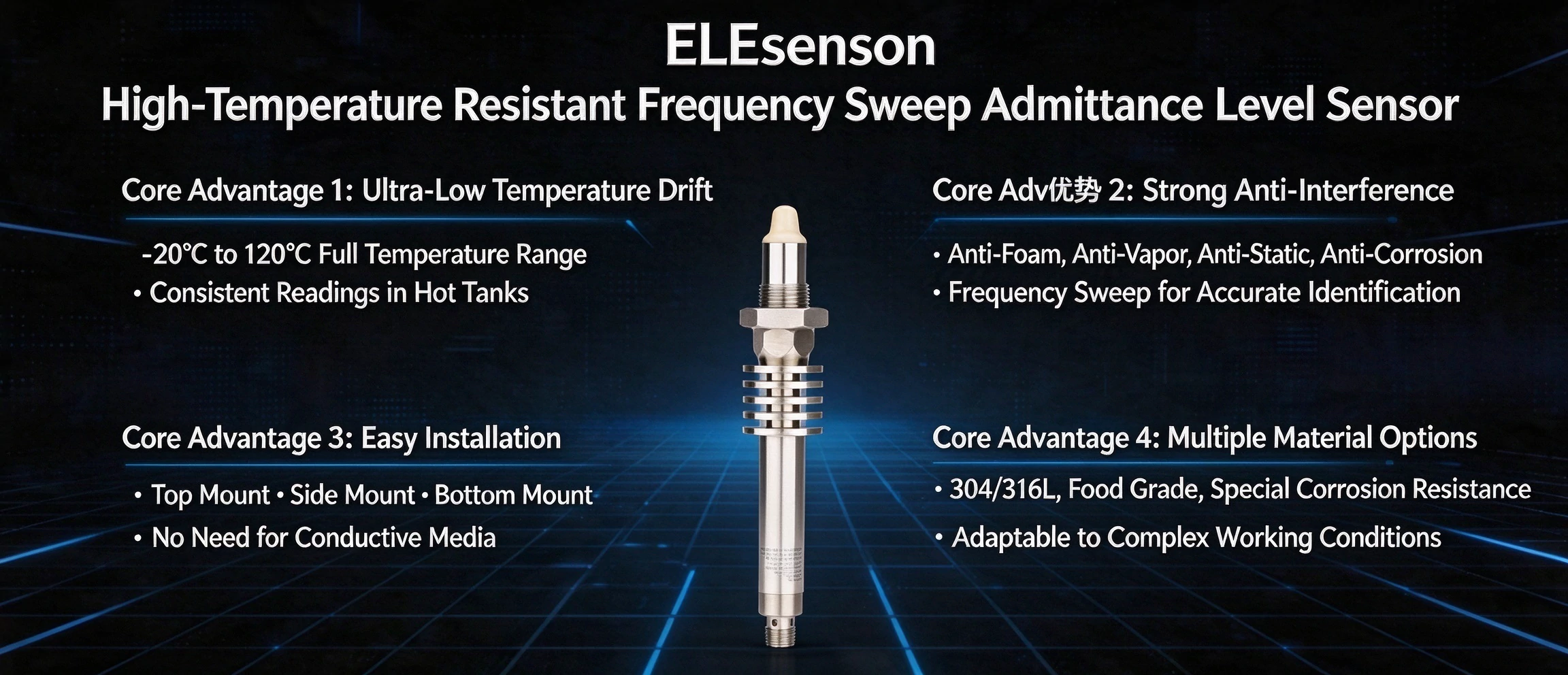
1. Ultra-low temperature drift, consistent readings for hot and cold vessels
Three layers of design suppress thermal drift:
- High-grade high-temperature components and probe materials for stable physical and electrical performance.
- Built-in temperature compensation circuitry that monitors ambient temperature and calibrates parameters in real time.
- Proprietary algorithm compensation: tracks resonance peak shifts caused by temperature changes and corrects output automatically.
2. Swept-frequency principle delivers strong anti-interference performance
Heat resistance is only the baseline. The core advantage lies in its capability against material build-up, foam, dust and corrosion. Instead of measuring a single fixed frequency point, swept-frequency technology scans across the frequency spectrum to locate resonance peaks:
- Distinguishes residual build-up from real material by different dielectric signatures
- Filters false signals triggered by foam and dust
- Automatically adapts to material composition changes without re-calibration
It maintains accurate measurement under combined interference of high temperature, coating accumulation, dust and variable media.
3. Flexible mounting: top, side and bottom installation
High-temperature vessels are usually densely fitted with pipes and instruments with limited reserved ports. This sensor supports top, side and bottom mounting to fit new and existing tanks without vessel modification.
4. Multiple wetted material options for corrosion resistance
Corrosion gets intensified under high heat. Material selection can be customized:
- 304 / 316L stainless steel: cost-effective for general applications
- Food-grade stainless steel: food & pharma processes complying with sanitary requirements
- Special anti-corrosion alloys: custom options for aggressive media
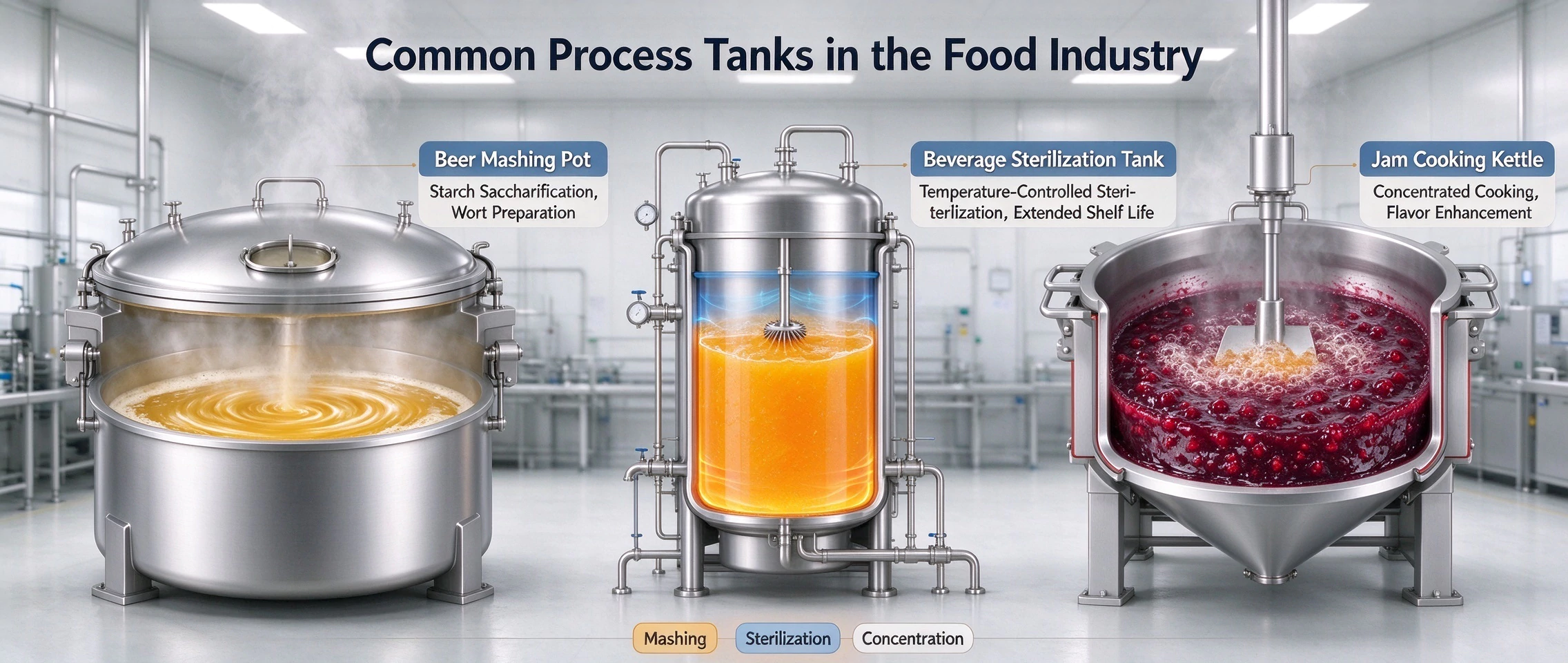
🍺 Food & Beverage | 80~130℃
Mash tun, sterilizer tank, jam cooker, UHT system. Sanitary grade available, compatible with CIP cleaning, anti-foam and anti-coating for full food production lines.
⚗️ Chemical & Pharmaceutical | 100~180℃
Reactor, crystallizer, evaporator. Process media are complex and corrosive. Stable readings guarantee consistent reaction control and product quality. Swept-frequency design tolerates variable composition, foam and probe build-up.
Plastics & Rubber Injection barrel, vulcanization tank. Handles pellets, melt and powder. No re-calibration needed for material changeover, stable long-run operation without thermal drift.
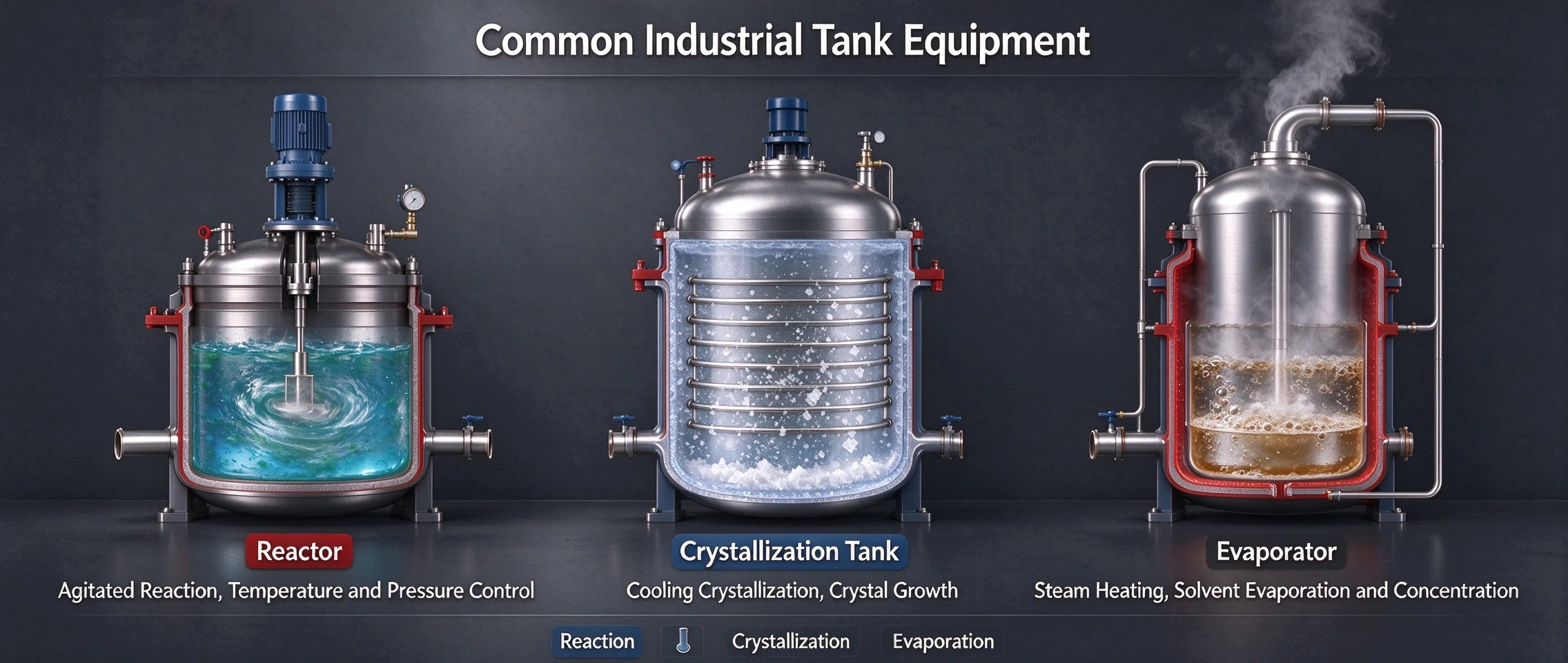
⚡ Power & Energy | 150~250℃
Boiler drum, hot water tank, coal silo. Level accuracy is critical for operational safety. Excellent long-term stability prevents unexpected shutdowns.
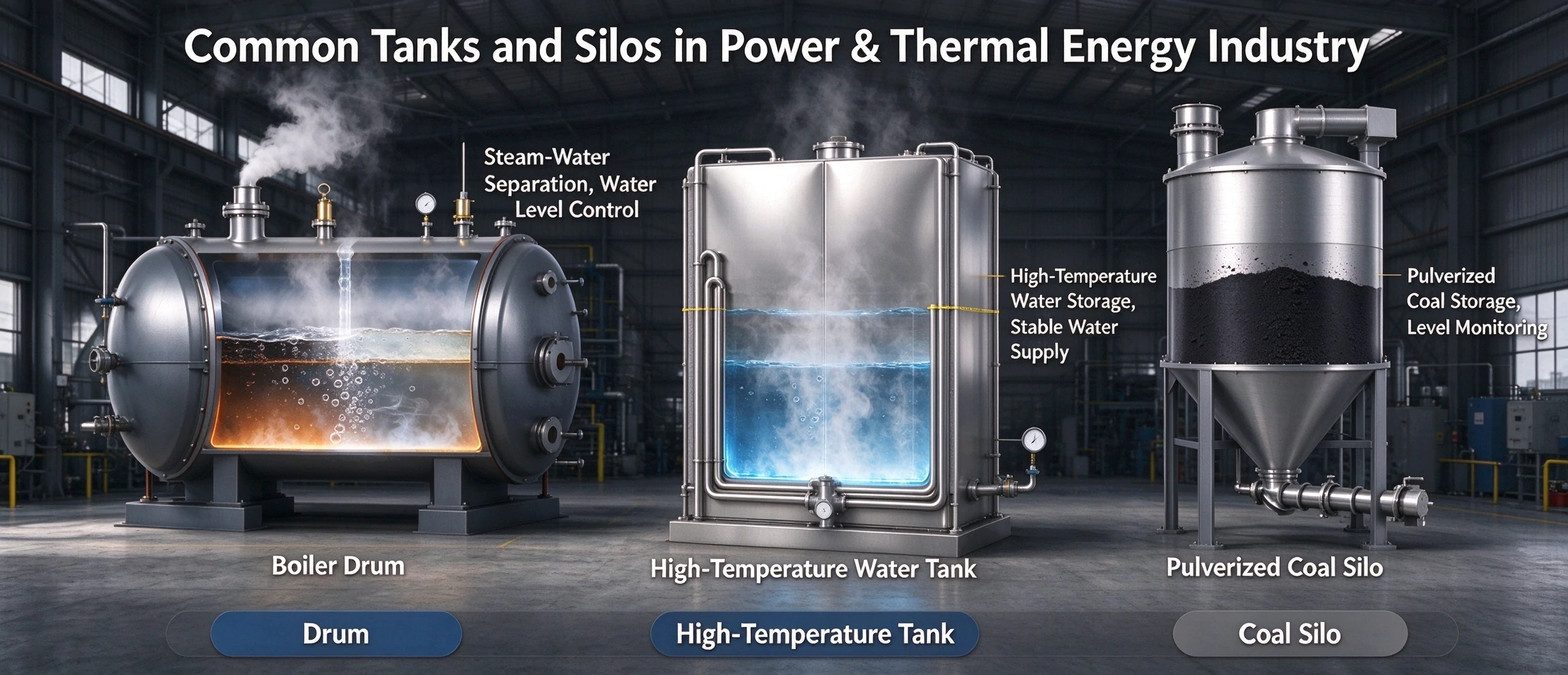
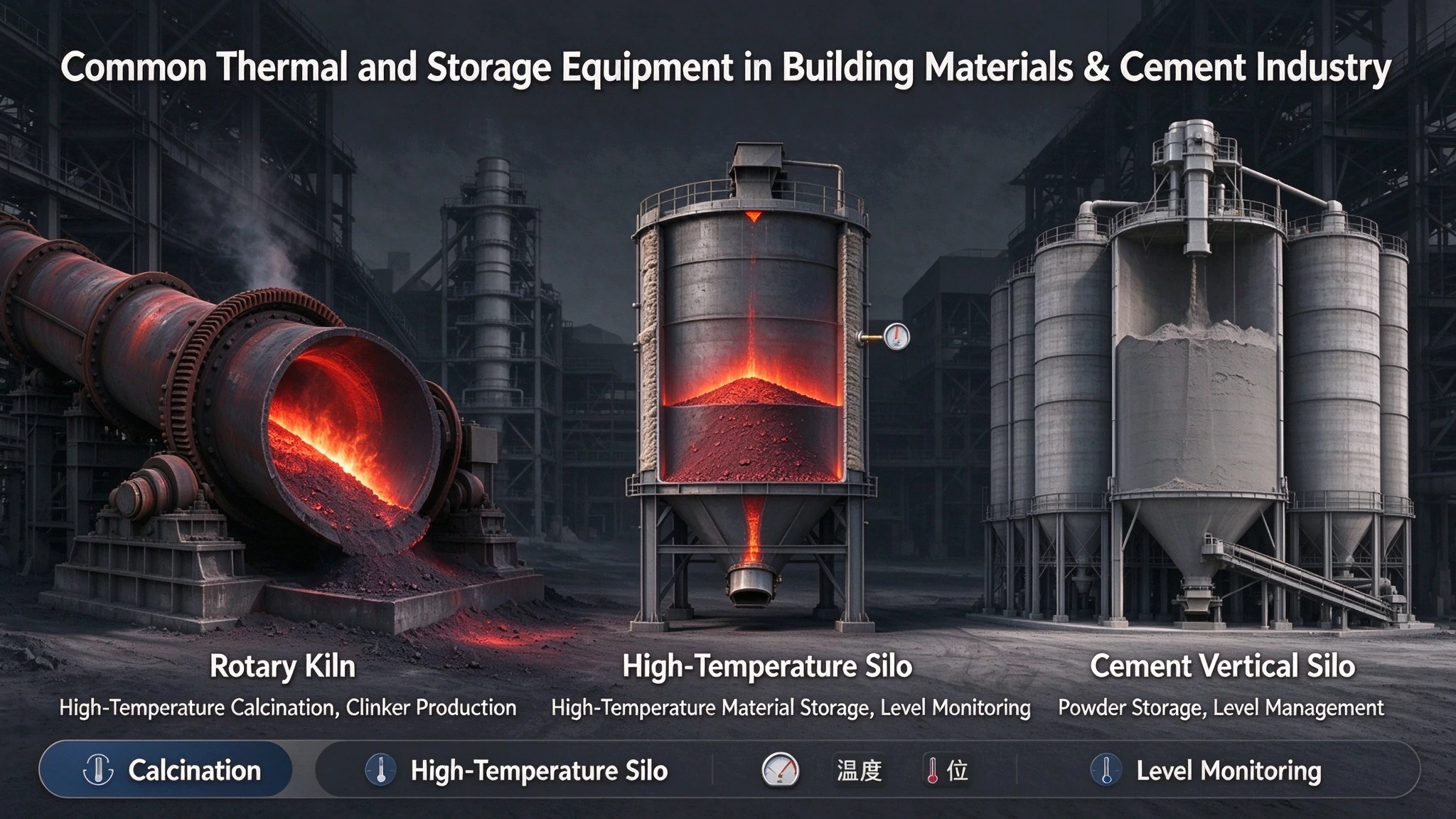
🏭 Building Materials & Cement | 100~200℃
Rotary kiln, high-temperature silo. Combines heat resistance, dust resistance and tolerance for uneven material surface. Minimizes maintenance work for cement plants.
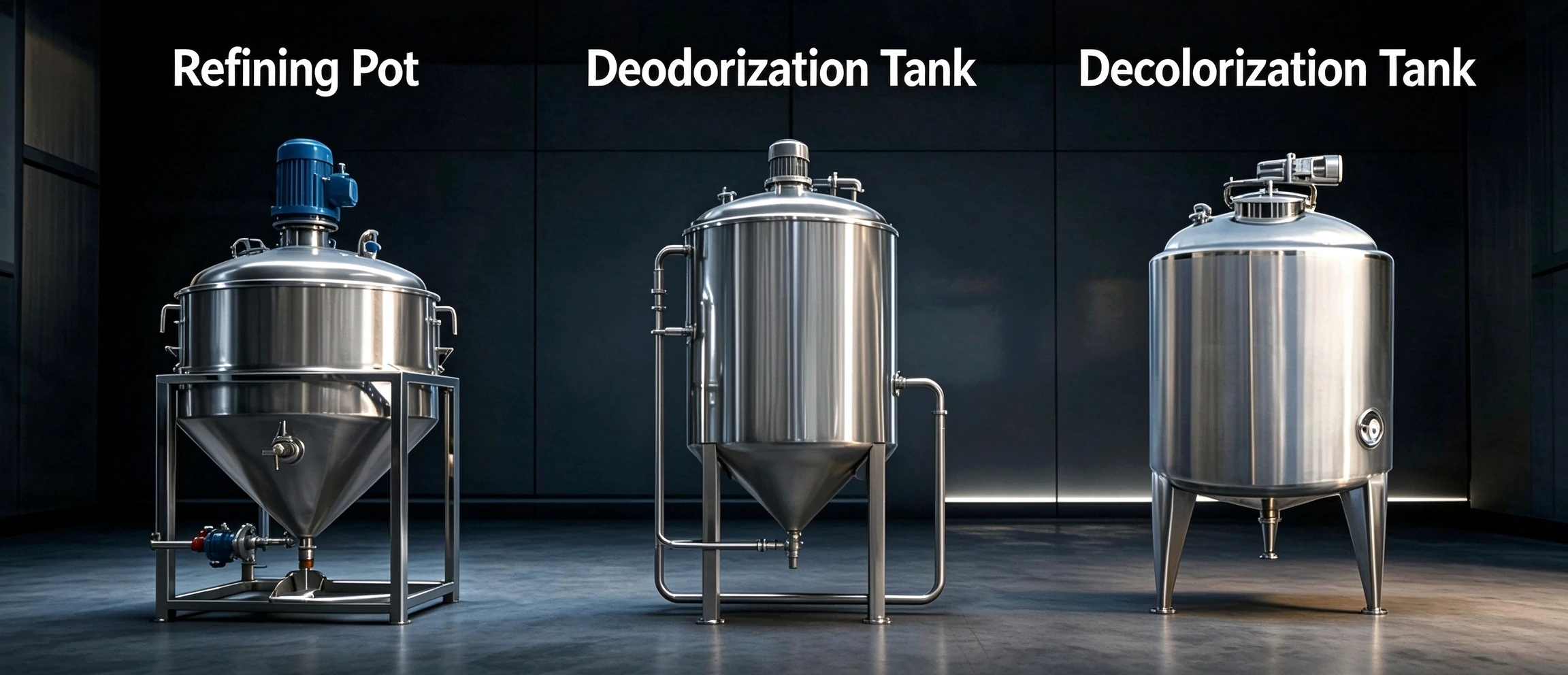
🛢️ Edible Oil Processing | 100~180℃
Refining tank, deodorizing tank, bleaching tank. Heavy scaling and coating are common. The algorithm separates hardened residue from real liquid level and cuts frequent disassembly & cleaning.
🧻 Paper & Textile | 80~150℃
Digester, dye vat, pulp chest. Viscous slurry tends to stick to walls. Performance is unaffected by media colour or transparency, an edge over ultrasonic and optical sensors.
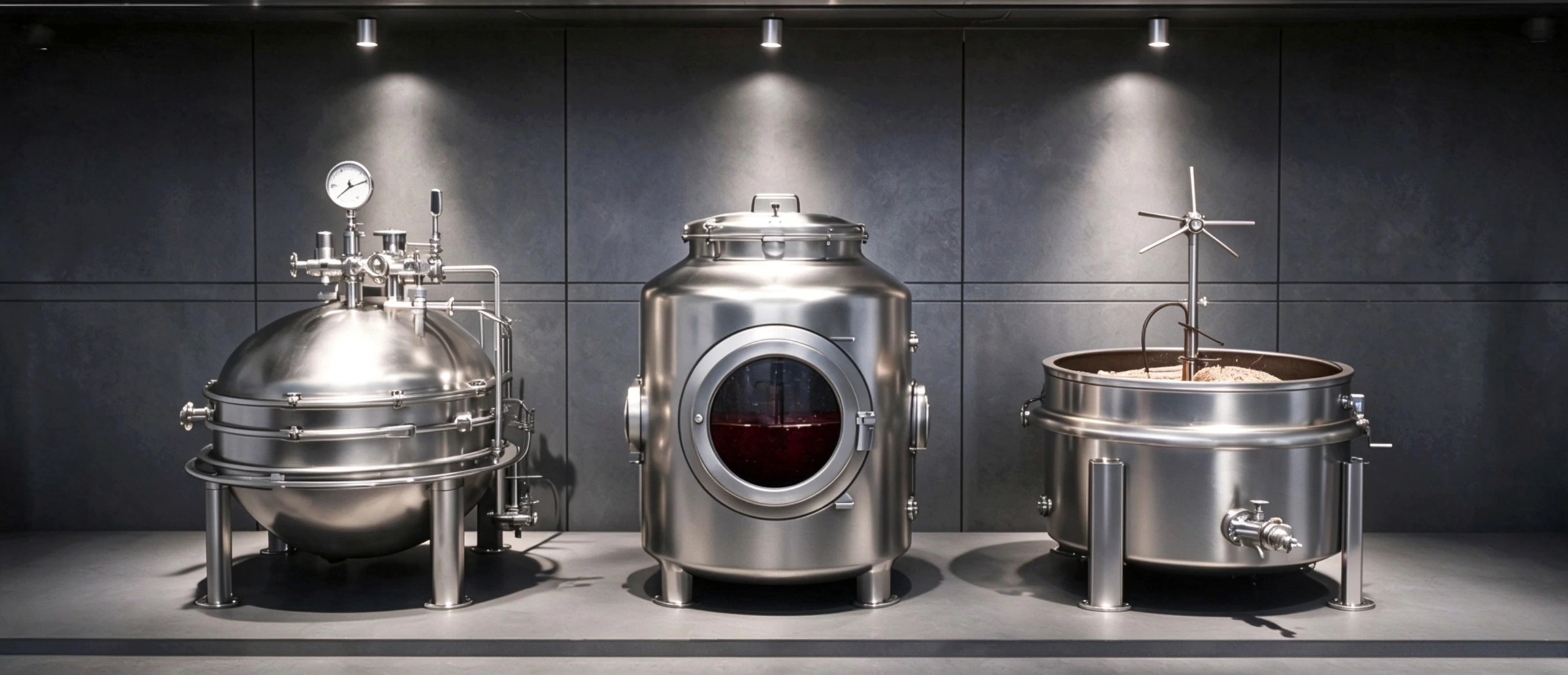
Many buyers only check temperature rating when sourcing high-temperature level transmitters. Yet pure heat resistance is not enough. The sensor must remain accurate, interference-resistant and durable under heat.
ELEsenson high-temperature swept-frequency admittance level sensor is not a basic heat-resistant variant. It is a complete solution built from the ground up — principle, hardware and algorithm — for complex high-temperature industrial conditions.
When Foam Mimics Liquid Surface: How Brewing Processes Avoid False Level Measurement Risks
Beer production may seem simple: malt goes in, beer comes out. But anyone who has managed production knows that level measurement can be a real headache.
Foam, temperature fluctuations, air pressure, dust, strict hygiene requirements — every stage brings its own challenges. Traditional level gauges often fail here, delivering inconsistent or unreliable readings.
Today we break down the five major pain points in level measurement for breweries, and how ELEsenson Swept-Frequency Admittance Level Sensors solve them one by one. We will explain the working principle and calculate the real economic value.
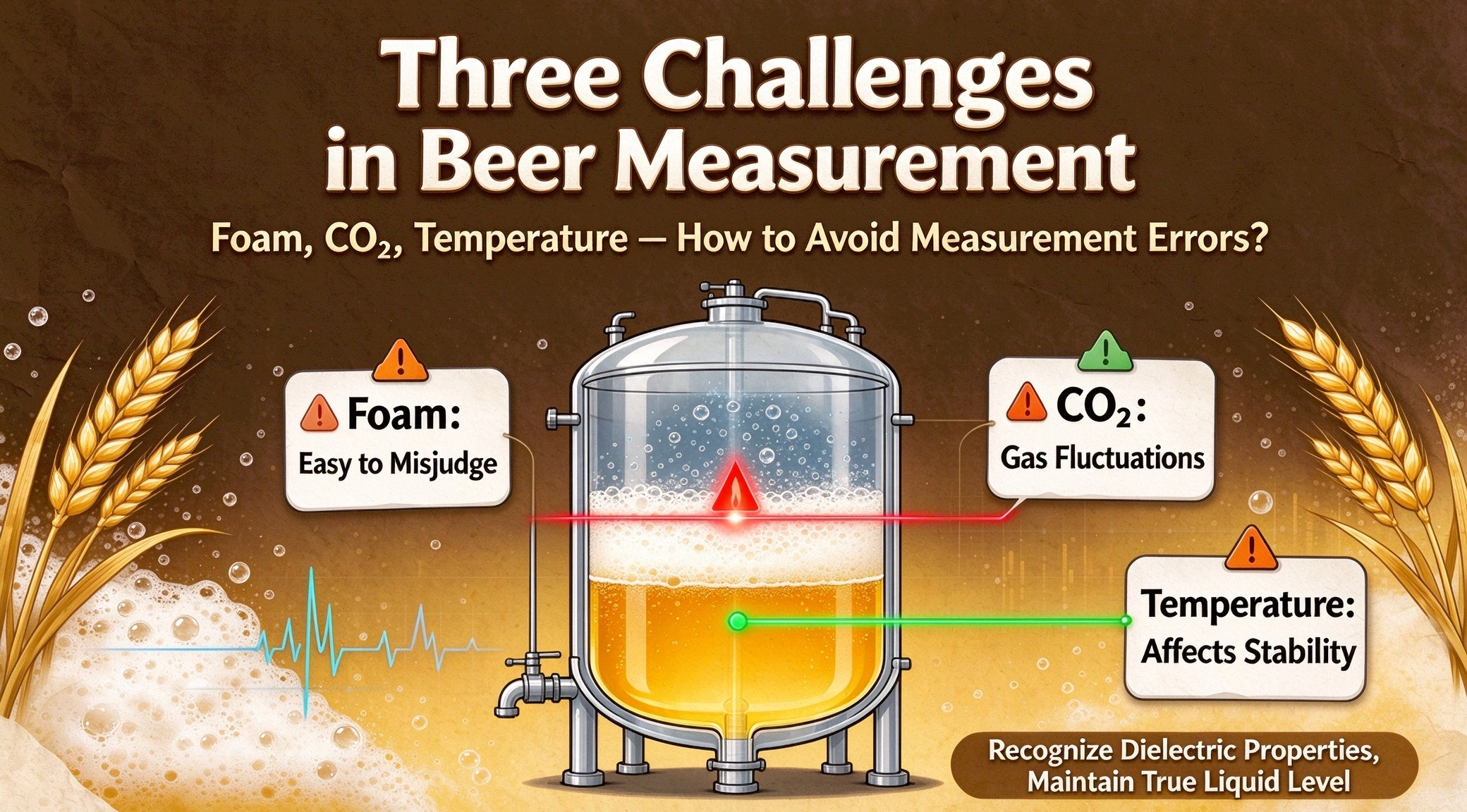
Pain Point 1: Foam Interference — The “Boy Who Cried Wolf” Problem
Foam is unavoidable in beer production. Boiling during mashing creates foam, and the foam layer can reach half a meter thick during peak fermentation in fermenters.
Ordinary capacitive and tuning-fork level transmitters get confused by foam, mistaking it for liquid and triggering frequent high-level alarms. Operators rush to check at first, but after dozens of false alarms, the alerts lose credibility.
When an actual tank overflow finally happens, nobody takes the alarm seriously. Thousands of liters of beer spill out, costing tens of thousands in losses.
Swept-frequency admittance solution:
ELEsenson swept-frequency sensors do not rely on readings from a single point. Instead, they scan across a full frequency spectrum to identify resonance peaks. Foam is a gas-liquid mixture with dielectric properties completely different from pure liquid; its resonance peak shape, position and intensity are distinct. The algorithm accurately distinguishes foam from genuine liquid level and eliminates misreading.
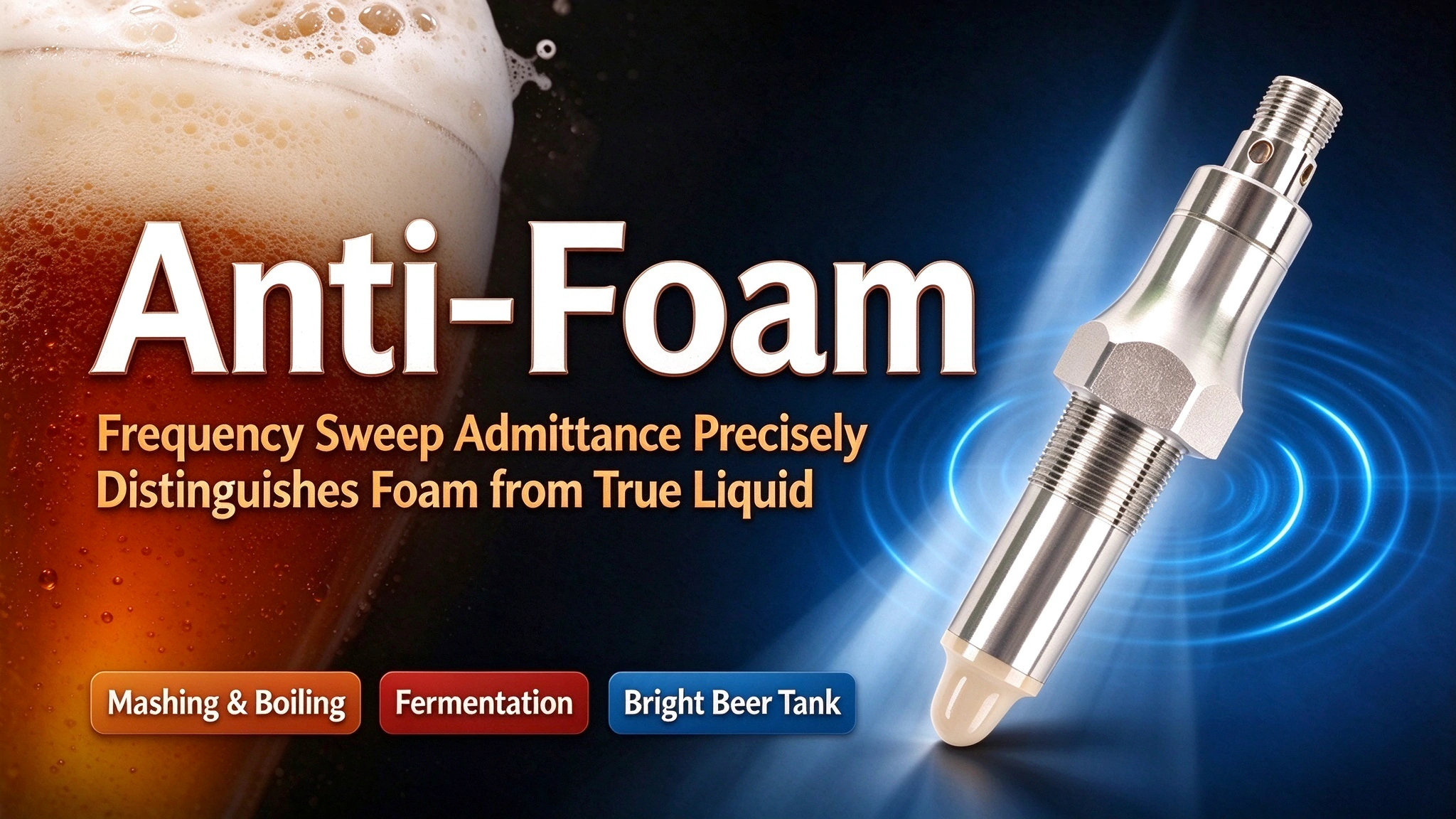 Business benefits:Tank overflow losses are eliminated. A single tank of beer is worth tens of thousands; preventing one incident a year pays for the sensor. Reliable alarms remove the need for repeated tank climbing inspections and improve site safety.
Pain Point 2: Wide Temperature Variations — Readings Drift Wildly from 100°C Boiling to 0°C Cold Storage
Brewery tanks operate across a huge temperature range. Mashing kettles reach 100°C during boiling, bright beer tanks cool down to 0~4°C, and fermenters run at 8~15°C.
Many level instruments suffer severe temperature drift: readings for the same liquid level change between summer and winter, between hot and cold tanks, even morning and afternoon. Operators must rely on experience to estimate true levels, with constant manual adjustment leading to heavy workload and errors.
High-temperature swept-frequency admittance solution:
ELEsenson high-temperature swept-frequency admittance sensors feature ultra-low temperature drift design, maintaining stable measurements across the full temperature range of -20°C to 120°C. Temperature changes cause minor shifts in resonance peak position, which the algorithm tracks and automatically compensates for, so final level outputs remain unaffected.
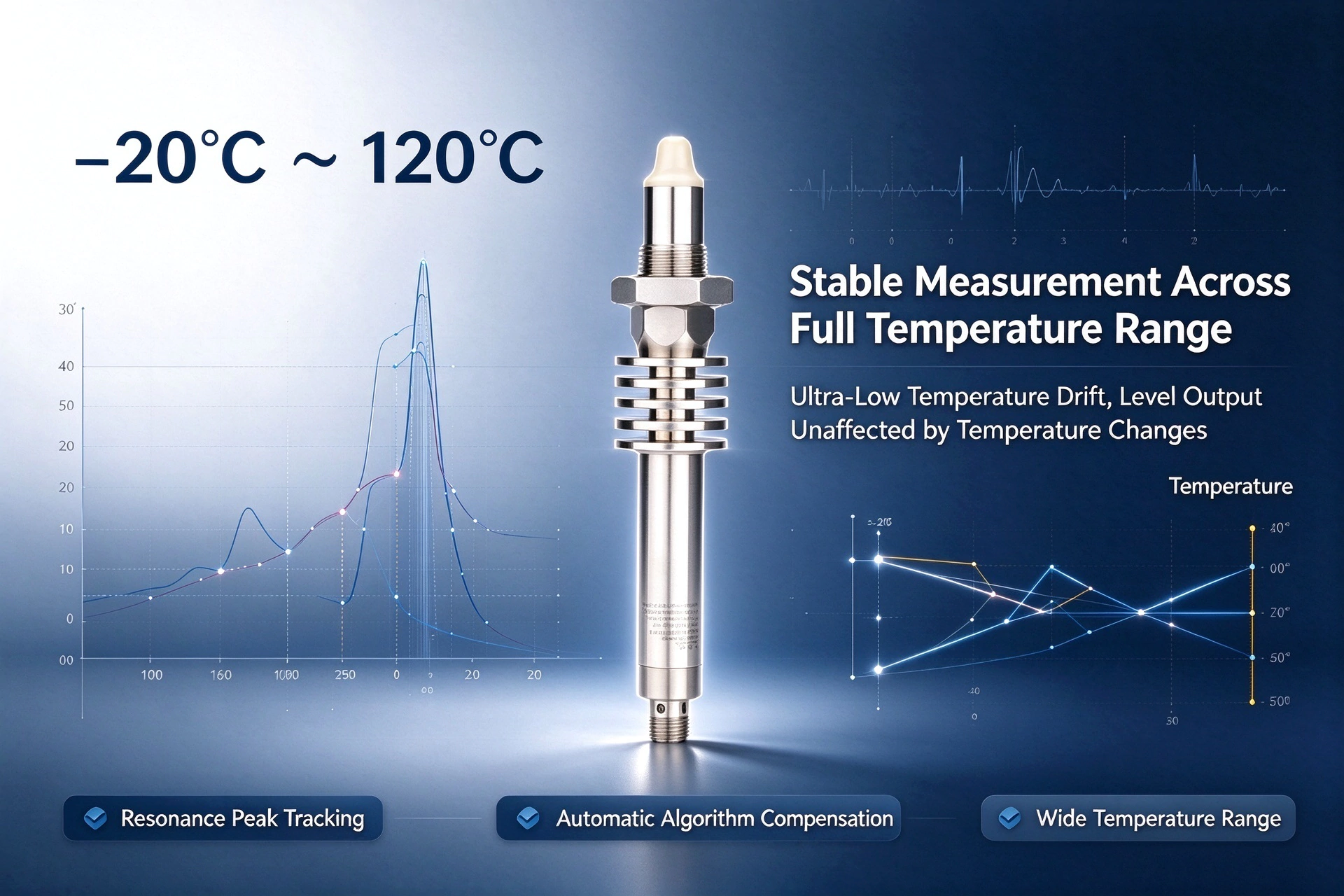 Business benefits: One sensor model works for both hot and cold tanks across the production line. No need to select different instruments for different vessels. Fewer spare parts, less operator training and simplified maintenance create substantial long-term savings.
Pain Point 3: CO₂ Backpressure — Readings Fluctuate During Fermentation
During fermentation, yeast consumes sugars to produce alcohol and CO₂, building variable backpressure inside tanks.
Some level measurement principles are pressure-sensitive: pressure changes alter dielectric constants and skew readings. Mid-fermentation, the measured liquid level may suddenly jump tens of centimeters, leaving teams unsure whether the tank is genuinely full or if pressure created a false signal.
ELEsenson swept-frequency admittance solution:
CO₂ gas has an extremely low dielectric constant and barely impacts swept-frequency measurement. Tank pressure changes only modify gas density, with negligible effect on dielectric properties. The swept-frequency sensor measures dielectric characteristics of the material between the probe and tank wall; gas pressure variations do not interfere with results.
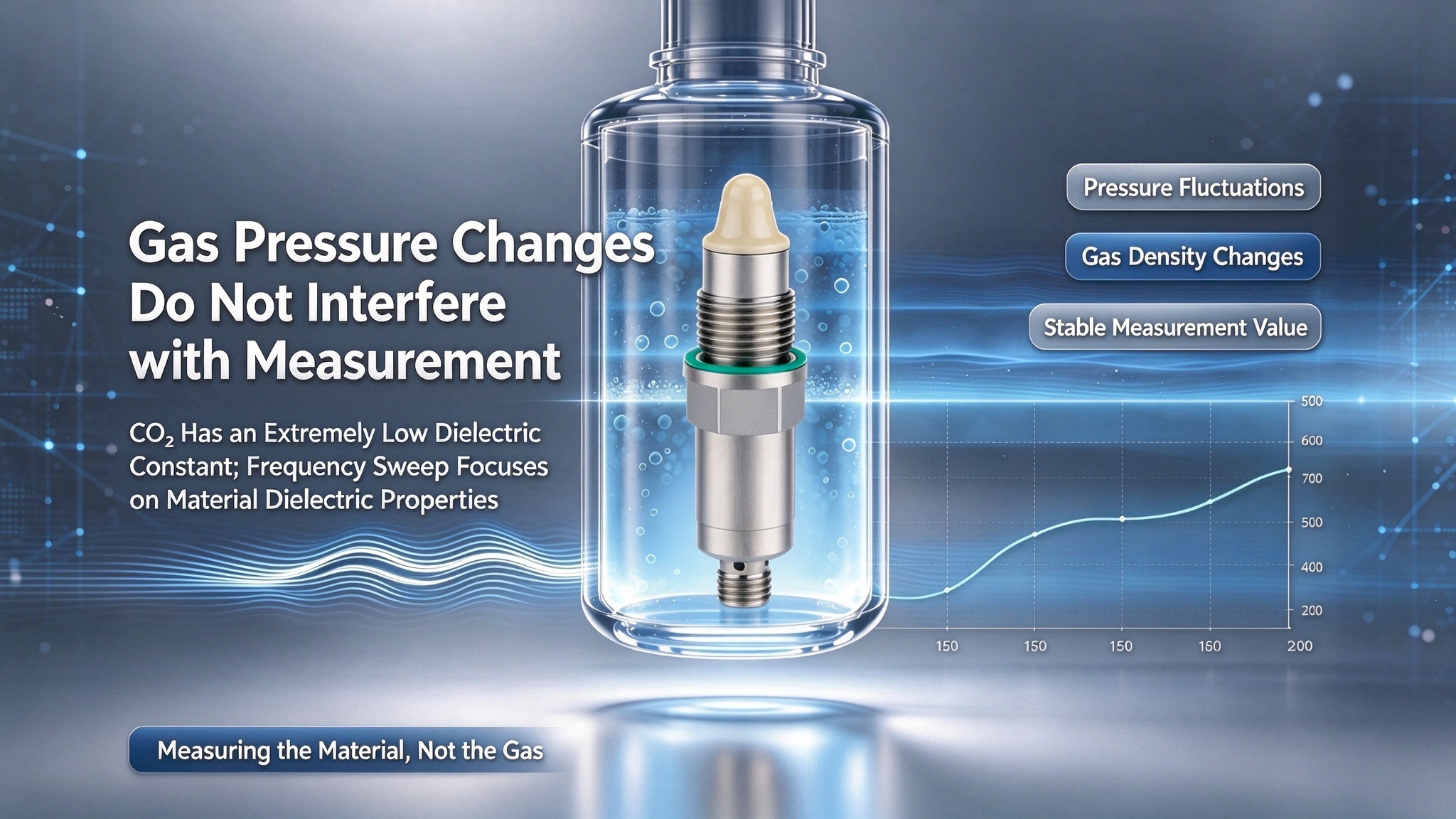 Business benefits:Trustworthy level data throughout fermentation enables precise yield calculation and full traceability of process parameters. When fermentation issues occur, historical data supports root-cause analysis instead of guesswork.
Pain Point 4: Installation Constraints — Crowded Tank Tops Leave Limited Mounting Space
Tank tops on fermenters and bright beer tanks are usually packed with equipment: manholes, CIP spray balls, breather valves, pressure gauges, temperature probes, leaving little room for level instruments.
Retrofits on older plants are even trickier. Existing tank openings have fixed sizes and positions. Replacing sensors often requires tank modification and new drilling, which is labor-intensive and disrupts production.
Swept-frequency admittance solution:
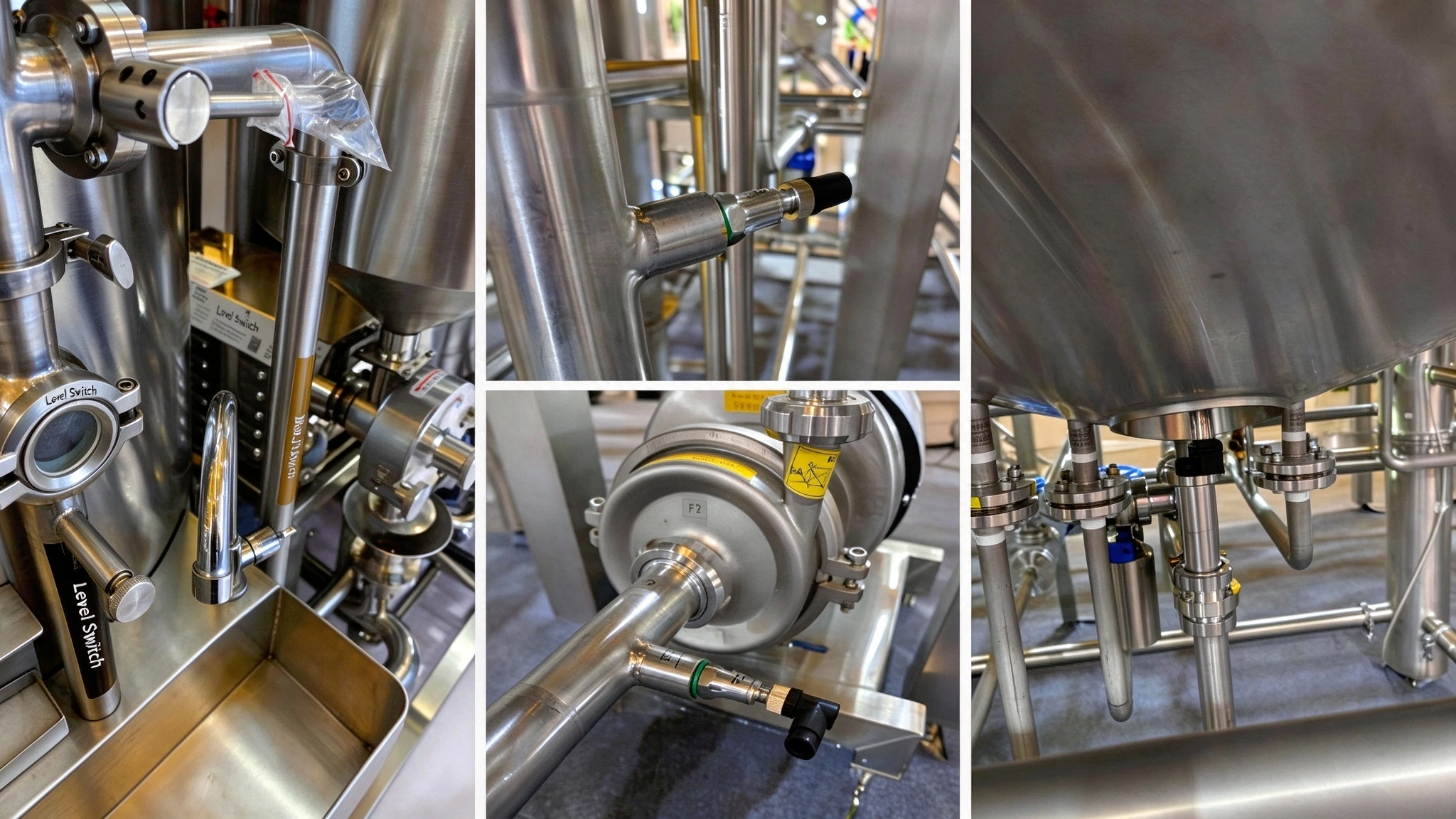
ELEsenson swept-frequency admittance sensors support three mounting configurations: top, side and bottom, for maximum installation flexibility.
• Top mount: standard choice when tank top space is available.
• Side mount: angled insertion from upper tank wall if the top is congested.
• Bottom mount: installed through the conical tank base when bottom space permits.
Existing tank openings can be reused without tank modification. Installation can be finished within one day, with commissioning completed in half a day.
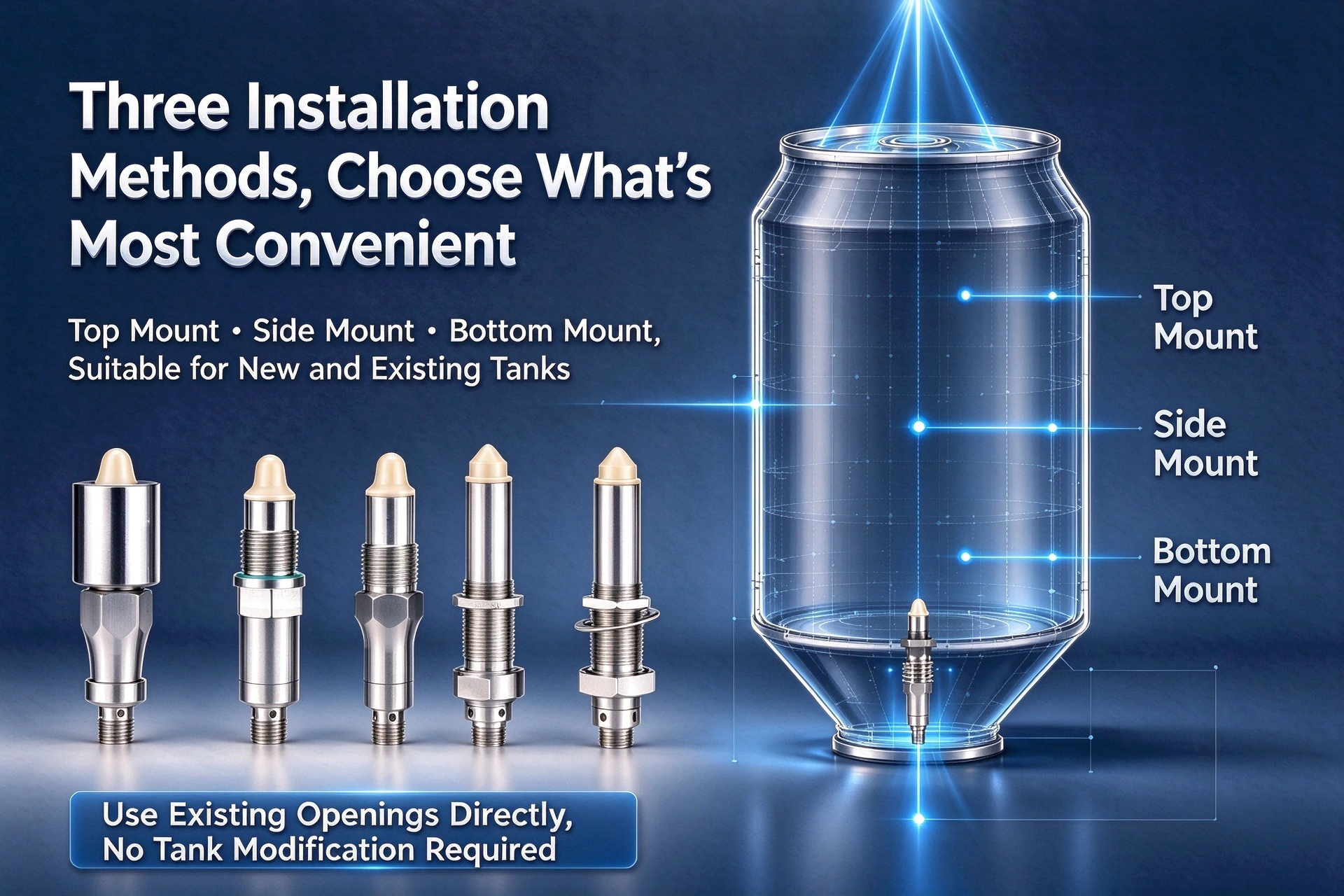 Business benefits: Compatible with both new and retrofitted tanks. No production shutdown required for tank modifications. Low installation cost, fast commissioning, ready for use the same day.
Pain Point 5: Strict Hygiene Requirements — Food Contact Compliance & No Disassembly During Cleaning
Hygiene is a non-negotiable red line in the food industry. Product-wetted components must meet food-contact standards, have smooth, crevice-free surfaces and allow thorough cleaning.
Some level instruments feature complex structures with crevices that trap residues. Others fail food-contact material certifications, or require removal for every CIP cleaning cycle — raising labor costs and contamination risks.
Swept-frequency admittance solution:
Wetted parts of ELEsenson swept-frequency admittance sensors use food-grade materials meeting food contact requirements. Polished probe surfaces are smooth, crevice-free and resist product buildup. Sensors stay in place during full-line CIP cleaning; no disassembly is needed, saving labor and eliminating contamination risks from repeated removal and refitting.
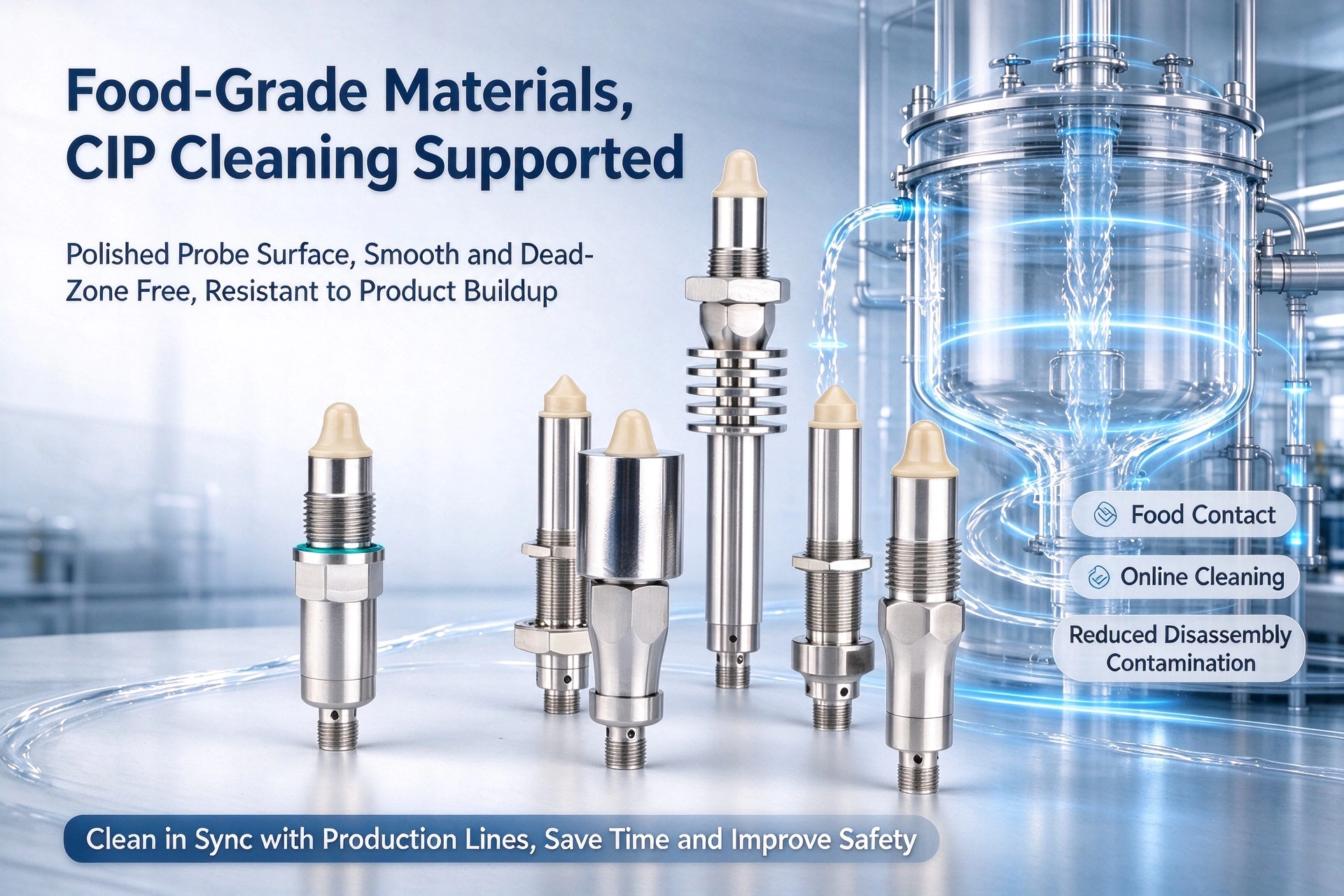 Business benefits:Pass audits and factory inspections smoothly, removing level instrumentation as a compliance risk. Higher cleaning efficiency accumulates significant time savings over repeated CIP cycles. Food safety protection safeguards brand reputation.
Many breweries only look at upfront purchase cost when selecting level instruments, assuming cheaper is better. But when calculating total cost of ownership, low-cost options often prove far more expensive.
❌ Costs of conventional level instruments:
• Tank overflow losses: tens of thousands per incident; one major overflow per year is costly
• Labor cost: operators climbing tanks for inspections and repeated calibration
• Maintenance cost: multiple models across the plant requiring large spare part inventories
• Quality risk: inaccurate level → filling deviations → customer complaints or failed inspections
• Safety hazard: frequent tank climbing exposes staff to fall risks
✅ Savings with ELEsenson Swept-Frequency Admittance Sensors:
• Eliminate tank overflow: savings ranging from tens of thousands to hundreds of thousands annually
• Reduce labor: reliable alarms remove routine tank-top inspections
• Unified model: one instrument type for the whole line, cutting spare part inventory by half
• Stable product quality: high filling accuracy reduces customer complaints
• Improved safety: fewer high-altitude operations lower accident risk
Level measurement may appear minor, yet it impacts efficiency, safety and quality across the entire production line. Accurate measurement equals cost savings.

The Invisible Engineer Inside Chocolate Factories
Anyone who has toured a chocolate factory remembers the iconic sight: molten chocolate flows like dark brown silk inside massive stainless steel tanks, while rich cocoa aroma fills the air.
Few people notice the inconspicuous small device mounted on top of every tank.
This is the Bluetooth swept-frequency level sensor.
Tiny as it looks, it keeps the entire chocolate production line running reliably.
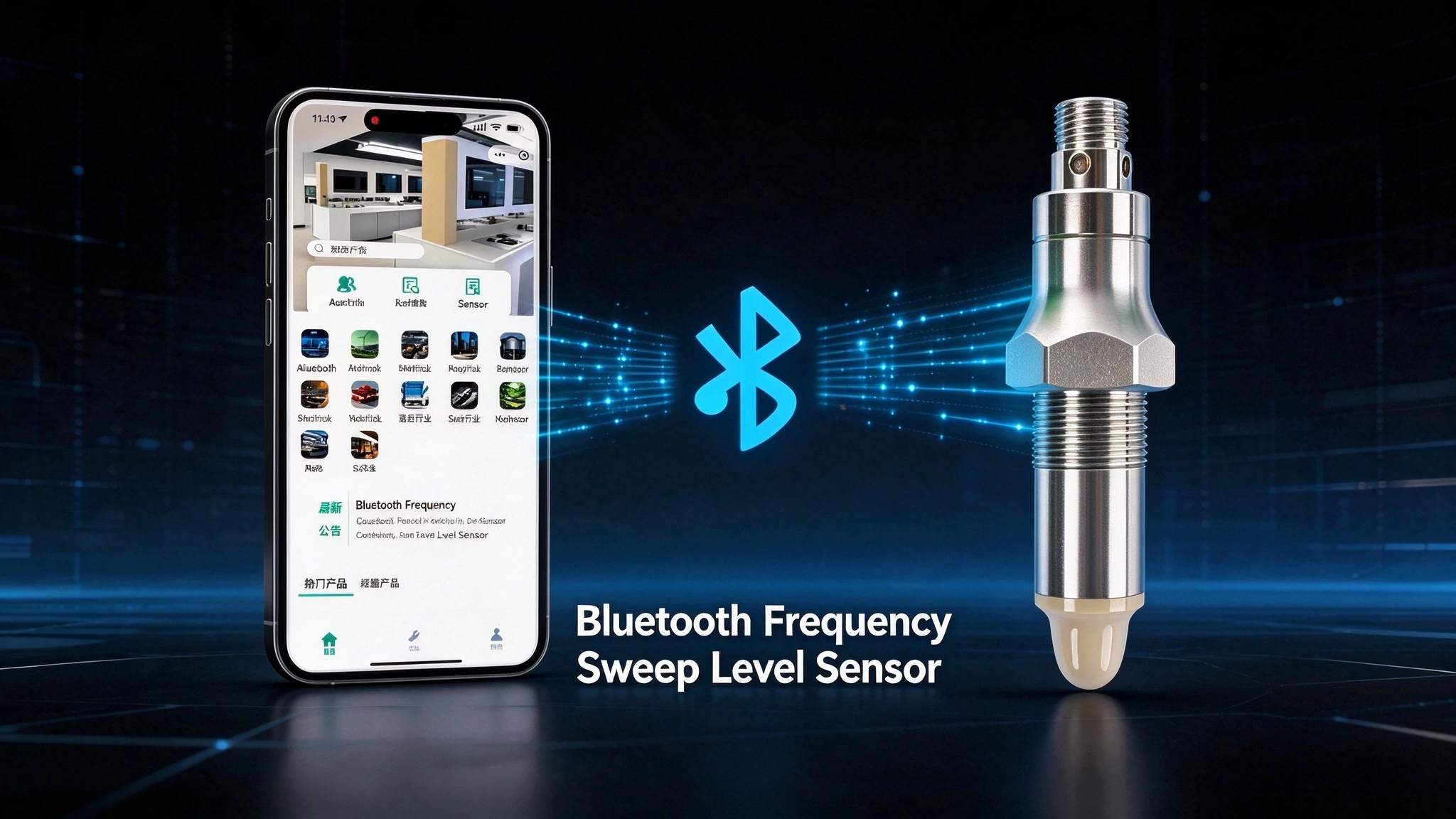
Many assume level measurement simply checks how full or empty a tank is. For chocolate manufacturing, it is far trickier.
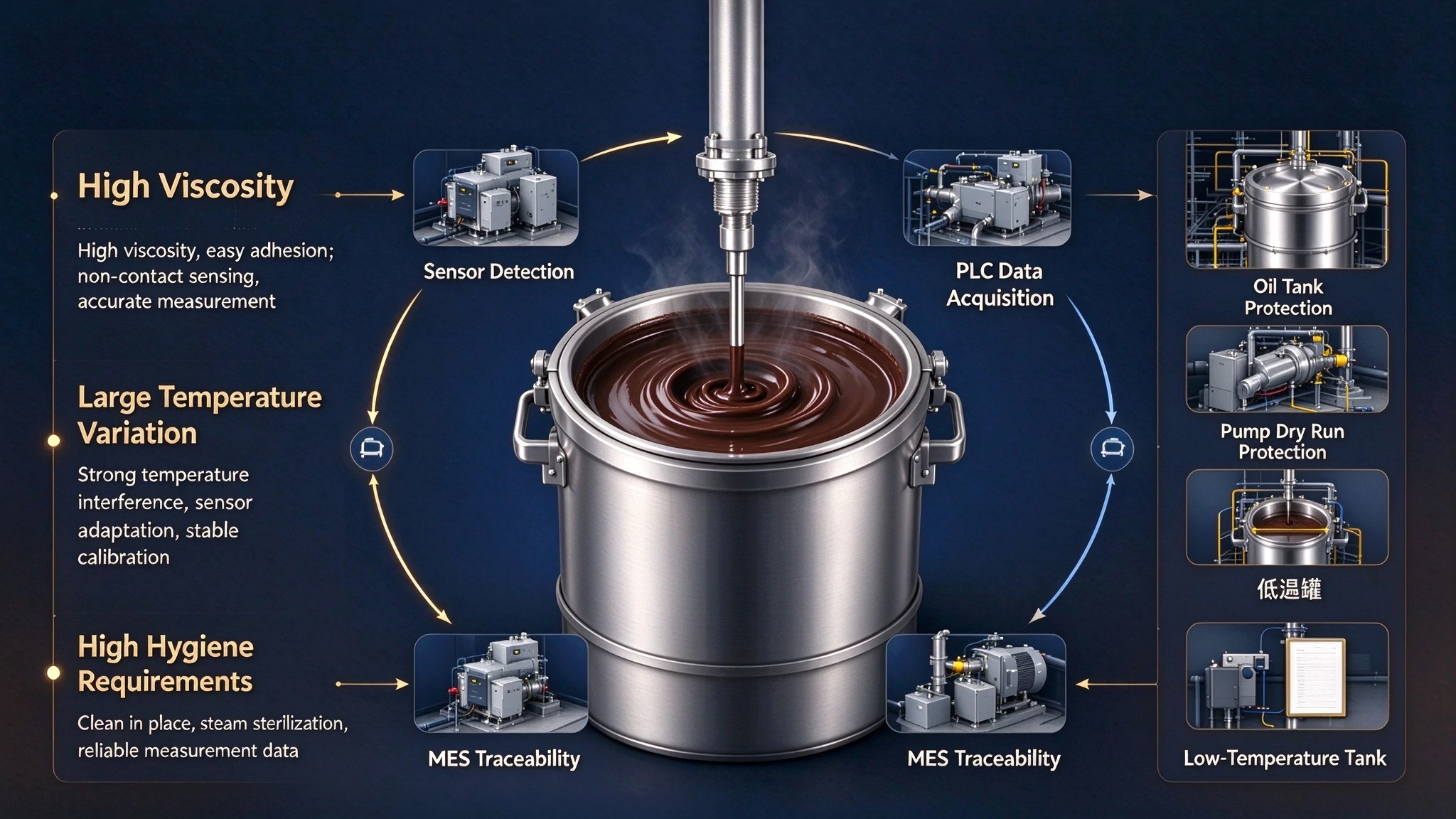
First, high stickiness. Molten chocolate has extremely high viscosity. Once temperature drops, it solidifies and clings firmly to sensor probes. Traditional capacitive and admittance sensors deliver distorted readings once coated by chocolate buildup, rendering measurements unreliable.
Second, drastic temperature swings. Temperatures vary from 45°C inside insulated tanks down to ambient room temperature. Such fluctuations shift dielectric constant readings and trigger false alarms.
Third, stringent hygiene standards. Food-grade components must comply with strict sanitary requirements: no dead pockets for residue buildup and easy cleaning.
A senior maintenance technician with ten years of chocolate plant experience told me a memorable line:
“When a sensor fails in other workshops, you just swap it out. Here, inaccurate level readings can ruin an entire batch of chocolate, or shut down the whole production line.”
This statement is no exaggeration. Chocolate production is continuous. Once tank level data drifts out of tolerance, downstream depositing, forming and packaging processes all collapse.
ELEsenson’s Bluetooth swept-frequency level sensor is built around one core principle: swept-frequency measurement.
Conventional sensors operate at one fixed frequency. Material coating and temperature drift throw the frequency off, leading to incorrect readings.
Swept-frequency technology works differently. Instead of locking onto a single frequency, it scans continuously across a frequency band to locate the true material resonance point.
Analogy: Traditional sensors are like listening for one single note while blindfolded. If the note shifts, they lose track. The swept-frequency sensor is equipped with a sensitive ear, scanning the full musical scale. It always finds the genuine resonance, no matter how much it drifts.
Three core benefits:
▸ Superior anti-sticking performance. Coating on the probe does not interfere. Swept-frequency technology automatically distinguishes residue stuck to the probe from actual material level to prevent false alarms.
▸ Minimal temperature impact. Frequency drift caused by temperature variation gets automatically compensated within the scanning range, delivering stable readings.
▸ Broad material compatibility. Works for thin slurries, pastes, granules and powders, as long as dielectric differences exist. No repeated recalibration required.
Technical specs must translate directly to tangible business value.
— Cut Material Waste —
Inaccurate level measurement causes two major losses: tank overflow and dry-run empty tanks. An overflow incident wastes dozens of kilograms of molten chocolate and requires hours of cleanup. Empty tanks are even worse: downstream pumps run dry, products suffer underfilling, and full line adjustments become mandatory.
The swept-frequency sensor achieves millimetre-level measurement accuracy, with nearly zero false high/low level alarms. One chocolate plant calculated the ROI: savings from eliminating overflow alone recover the sensor investment within six months.
— Lower Maintenance Costs —
How do factories handle coated traditional sensors? Dismantle and clean. Chocolate lines run 24/7. Removal, cleaning, reinstallation and recalibration take 2–3 hours of costly downtime.
Swept-frequency sensors rarely need disassembly. Chocolate residue on probes does not distort readings; standard CIP cleaning is sufficient. Maintenance cycles extend from weekly to every 3–6 months.
— Stabilise Product Quality —
Chocolate production demands tight control over temperature and tank level. Fluctuating levels create unstable pump feed pressure, leading to large weight deviations in moulded chocolate pieces.
Consistent level monitoring acts as the production line’s stabilising anchor. Better consistency in product weight reduces defect rates and customer complaints.
— Data Connectivity & Smart Factory Upgrade —
Many factories overlook this advantage initially but recognise its huge value later.
Elyiyi sensors support multiple output options and connect directly to factory PLC or MES systems. Real-time tank level data lets managers monitor vessel status from the office and enable predictive material replenishment and production scheduling.
Plants shift from manual patrols and paper logging to fully digitalised operations.
In industrial sensor sales, we often get asked: what makes your product stand out?
On datasheets, sensors look largely similar: stainless steel housings, level measurement, standard signal outputs.
The real difference reveals itself only after installation and three months of continuous line operation.
Some sensors run unattended, delivering steady data reliably. Others suffer reading drift and false alarms week after week, tying maintenance crews down in constant troubleshooting.
After years in sensor manufacturing, Elyiyi holds this belief: a great sensor should be the quiet worker on your factory floor.
It needs no frequent attention, no repeated calibration, no regular removal for scrubbing. It sits quietly atop your tank, precise, stable and dependable — like an invisible engineer safeguarding your production.
That is all it needs to do.