

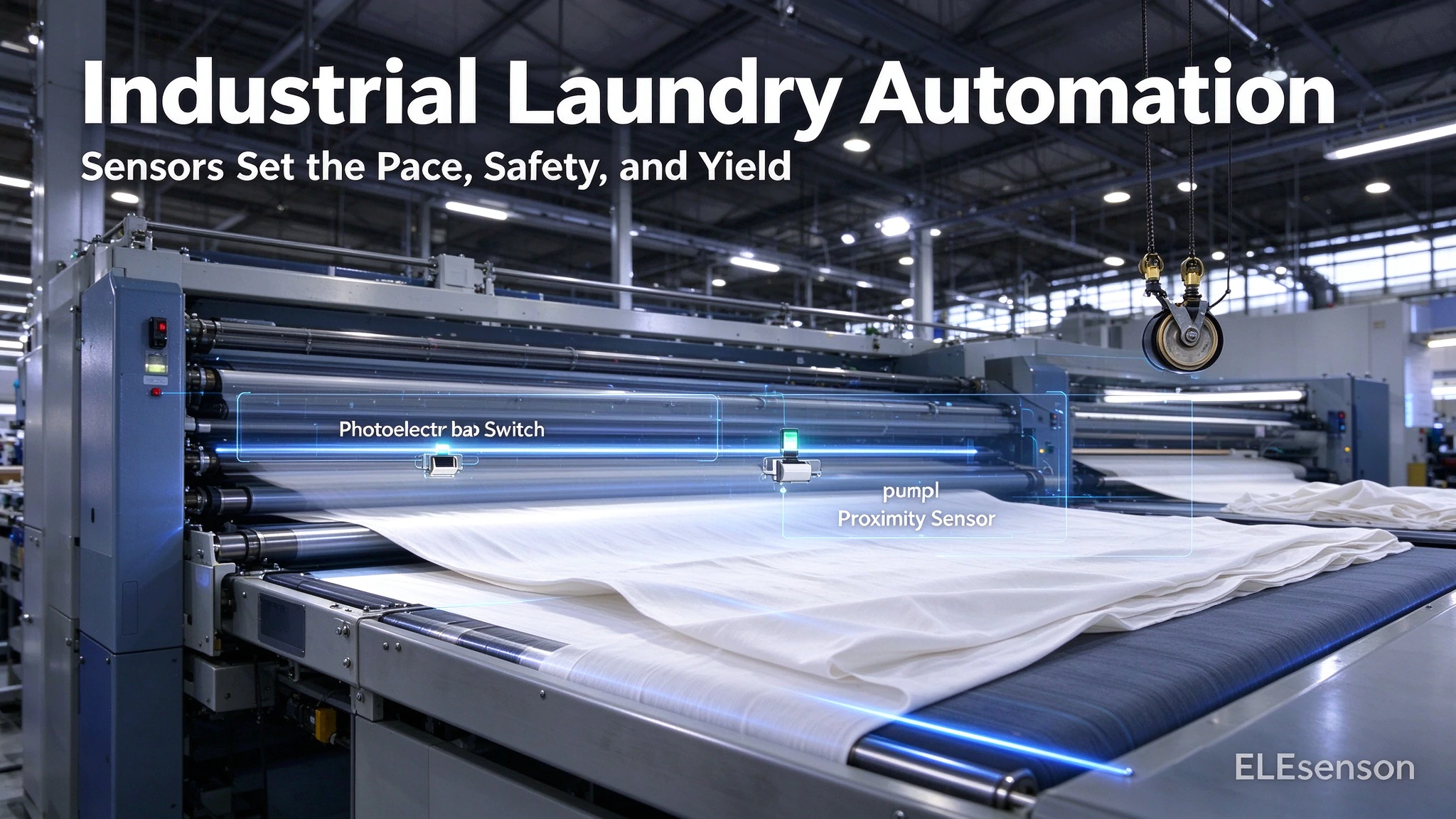
I Counted a Dozen Sensors on a Single Machine at the Laundry Exhibition
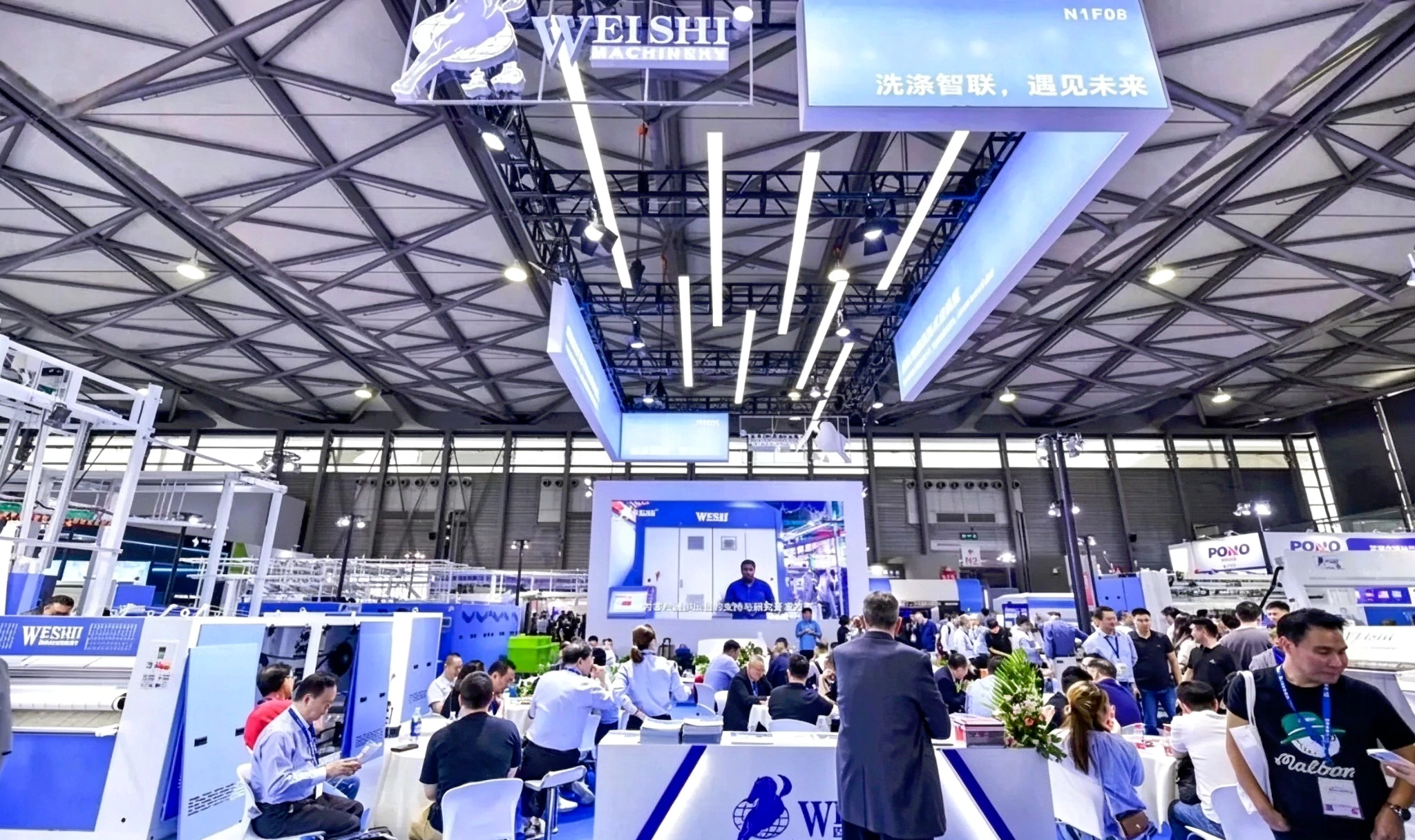
The Shanghai Laundry Expo in China Kicks Off in Grand Style, Unlocking a New Ecosystem for Industrial Laundry 01
To be honest, before visiting, my understanding of a commercial laundry plant stopped at “big washing machines plus dryers.”
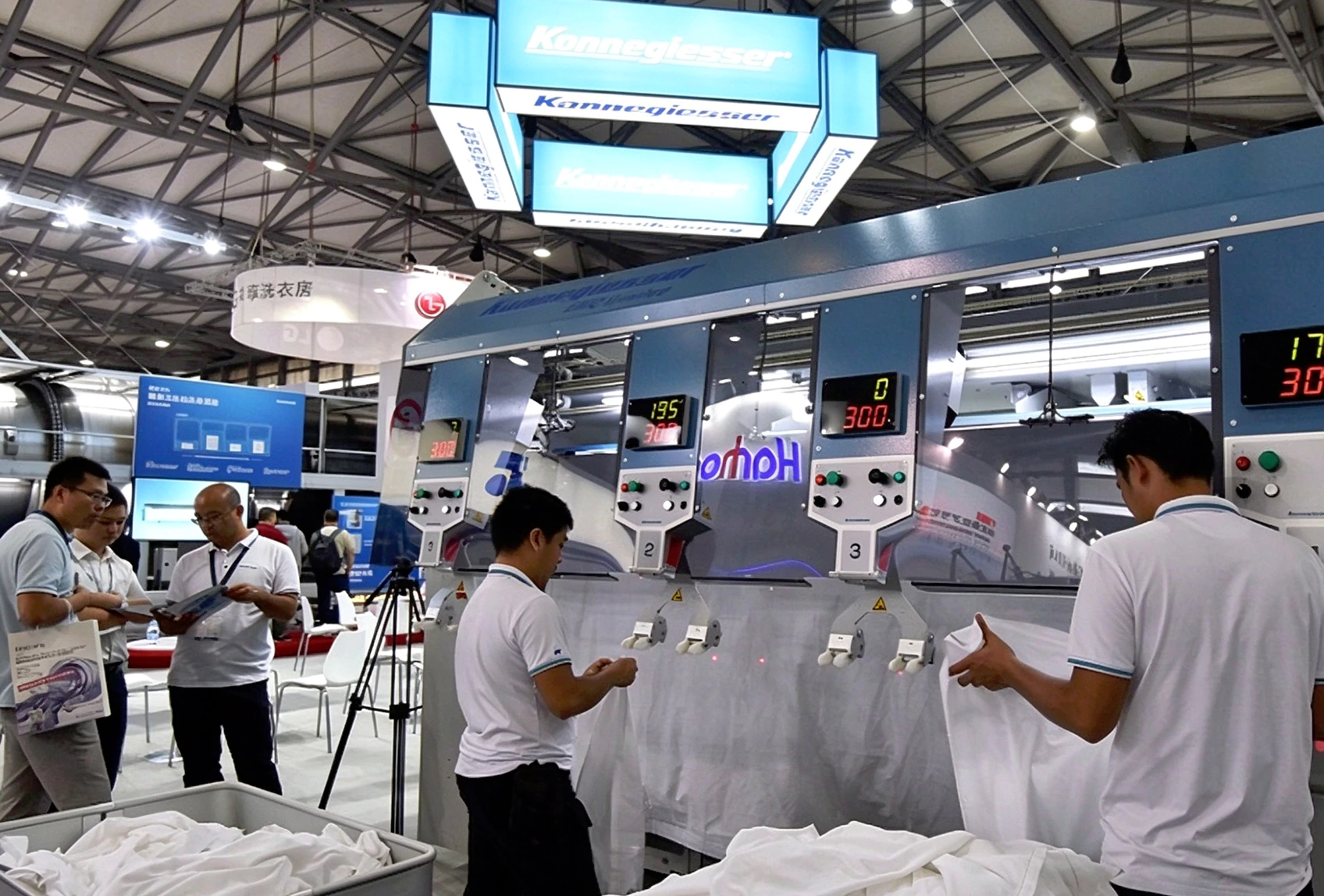
It wasn’t until we walked into the industrial washing exhibition in China and stood in front of ironers, folders, and feeders that it hit me.
this isn’t “washing clothes.” This is an entire, highly automated industrial production line.
Photoelectric switches: the “eyes” on the conveyor that set the pace of the whole line 02
At the first machine, my eyes went straight to the conveyor. A stack of towels went in at the feed, the belt ran smoothly, and at a certain point the machine automatically started ironing and folding — with nobody pressing a button.
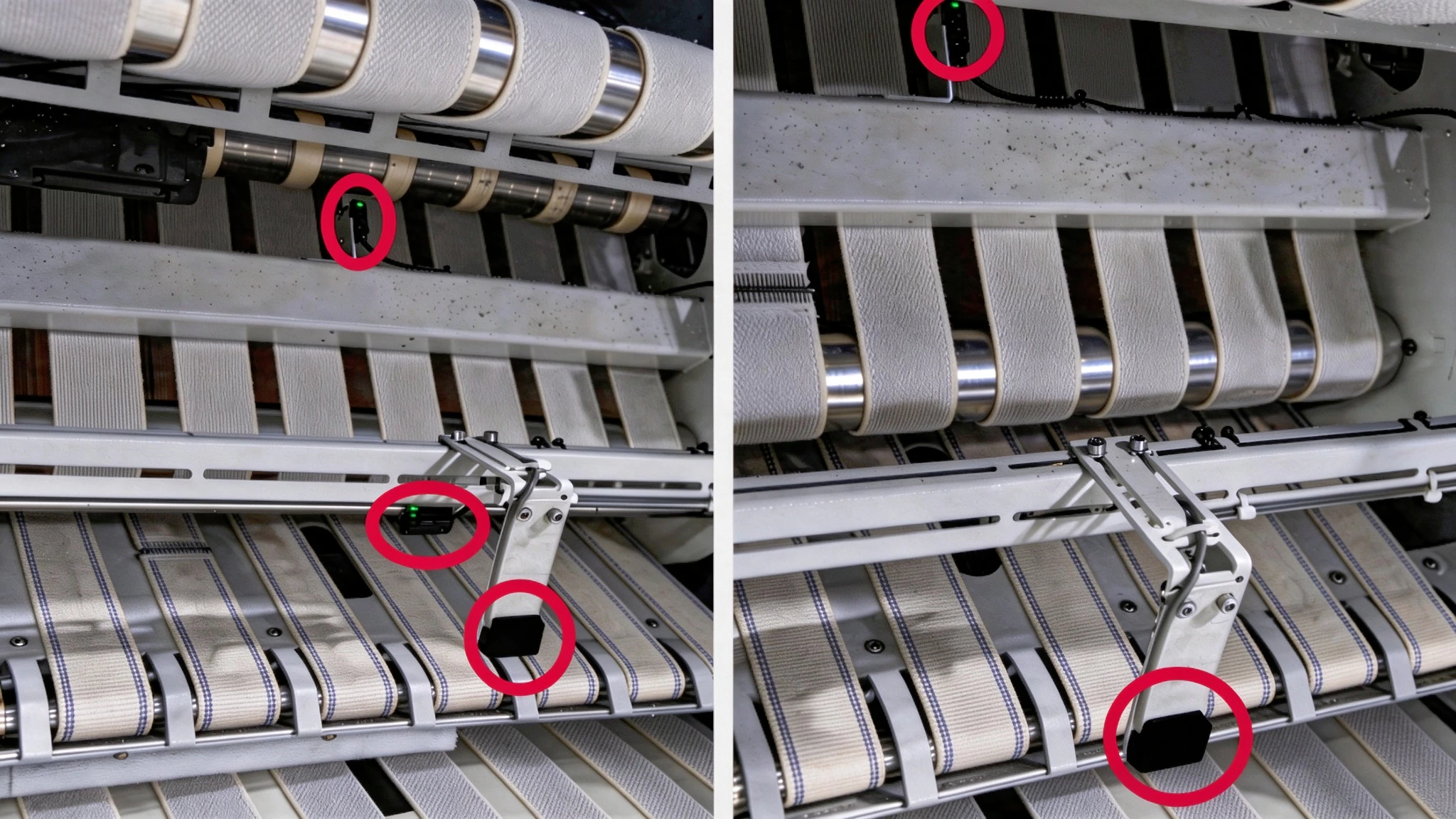
“Who tells the machine the linen is here?” I asked my colleague. He pointed at a fingernail-sized part on the side of the belt ——
photoelectric switch.
When the fabric arrives, the light is blocked, a signal fires, and the machine starts. When it passes, the light path recovers and the machine stands by.
That tiny component sets the pace of the entire line. Without it, the machine either idles and wastes power, or fabric piles up and jams. A laundry plant processes thousands of pieces of linen every day, and every “yes/no” judgment has to be right — one miss, and the whole line stops.
Proximity sensors: the “gatekeepers” up top that catch a fault in the first second 03
Look up and you see a different story. The top of the machine is full of pulley banks — linen is pulled from one roller to the next, driven by these wheels. Get close and you’ll find a small device near almost every pulley: a proximity sensor.
It doesn’t touch the wheel, yet it can sense whether it is turning and turning correctly. The moment a pulley stops — a torn cloth, a jam, or a worn bearing — the proximity sensor fires a signal and the whole line emergency-stops.
Don’t underestimate that stop. A 10-second delay can mean hundreds of meters of fabric scrapped.
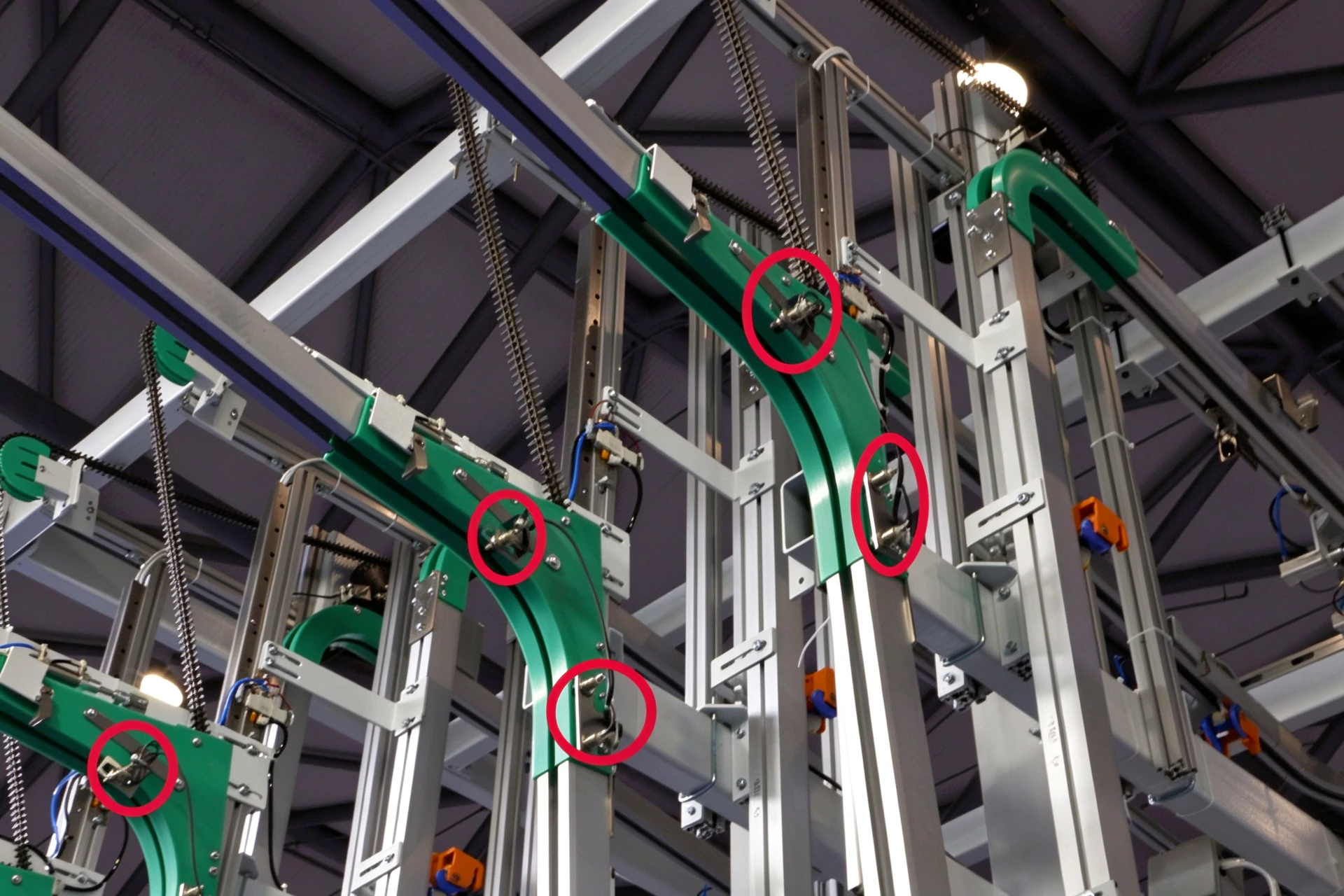 In a laundry plant, time is money: a high-speed ironing line handles dozens of meters per minute, and an undetected fault can eat a whole day’s profit in half an hour. The proximity sensor’s job is to catch the fault in the first second.
How many sensors does an industrial washing machine really carry? 04
My colleague and I started counting. On a standard tunnel ironer, besides the photoelectric switches and proximity sensors we’d already covered ——
sensors are hidden in every roller, belt, and pulley bank
▎Level sensors
in water and detergent tanks, detecting water/level to refill and dose automatically.
▎Temperature sensors
controlling heat in dryers and ironers, protecting fabric from scorching while keeping drying efficiency high.
▎Pressure sensors
monitoring steam lines and pneumatic systems — safety protection and efficiency control in one.
▎Speed sensors / encoders
checking belt and roller speed to keep every stage in sync — no stretching, no bunching.
▎Color sensors / photoelectric identification
in the sorting stage, identifying linen type and color to route baskets automatically.
In the end, even we were surprised ——
a single washing machine hides a dozen or even dozens of sensors.
They don’t speak and they’re easy to miss — some are smaller than a button — yet the machine’s rhythm, safety protection, and yield all ride on these tiny devices.
Why industrial laundry automation comes down to sensor precision and reliability — ELEsenson 05
Because this is exactly our core business.
ELEsenson has made sensors for many years — from industrial-grade photoelectric switches and proximity sensors to the increasingly popular smart sensors and AI vision inspection. We’ve seen too many industries to count — textiles, food, chemicals, logistics — and behind every automation upgrade, sensors do the foundational work.
Laundry is no different. Old-school plants relied on experienced operators watching and adjusting by feel. Today labor is more expensive and throughput demands are higher; one machine processes tons of linen a day, far beyond what the human eye can monitor.
Sensors are the “nerve endings” of industrial automation.
the more sensitive the endings, the smarter and more stable the line.
At the exhibition, we also saw the industry shifting: more and more washing equipment makers are now equipping high-quality sensors from the factory, instead of retrofitting them after a customer hits a problem. That’s a good sign. It means people are finally realizing that
in the automation race, competition often comes down to sensor precision and reliability.
— EPILOGUE —
After half a day at the show, as we walked out of the hall, a colleague said something interesting:
“I used to think of sensors as industrial parts. Now I think of them as the invisible infrastructure of every industry.”
The white towels in your hotel, the clean tablecloths in the restaurant, the sheets in the hospital — behind all of them, a highly automated laundry line is running, and every line is packed with sensors. They don’t speak, but they never stop working.
Looking for reliable photoelectric switches, proximity sensors, and smart sensing solutions for your industrial washing line? Contact ELEsenson for product selection and technical support.
Temperature sensors Product Page
Speed sensors Product Page

elesenson
ELEsenson is a company specializing in the research, development, production, and sales of sensor technology, located in Wenzhou, Zhejiang, China. Upholding the corporate philosophy of “striving for perfection and pursuing excellence,” the company is committed to providing precise and reliable sensor solutions to customers worldwide. The company boasts an experienced R&D team dedicated to the research and development of cutting-edge sensor technologies. ELEsenon not only prioritizes product quality but also places a strong emphasis on customer needs. Production strictly adheres to international quality management system standards, ensuring that every product meets or exceeds customer expectations. Moving forward, Zhejiang ELEsenon will continue to pursue technological innovation and uphold the principle of quality first, striving to become a global leader in the sensor industry and providing customers with superior products and attentive service.