


The Invisible Engineer Inside Chocolate Factories
Anyone who has toured a chocolate factory remembers the iconic sight: molten chocolate flows like dark brown silk inside massive stainless steel tanks, while rich cocoa aroma fills the air.
Few people notice the inconspicuous small device mounted on top of every tank.
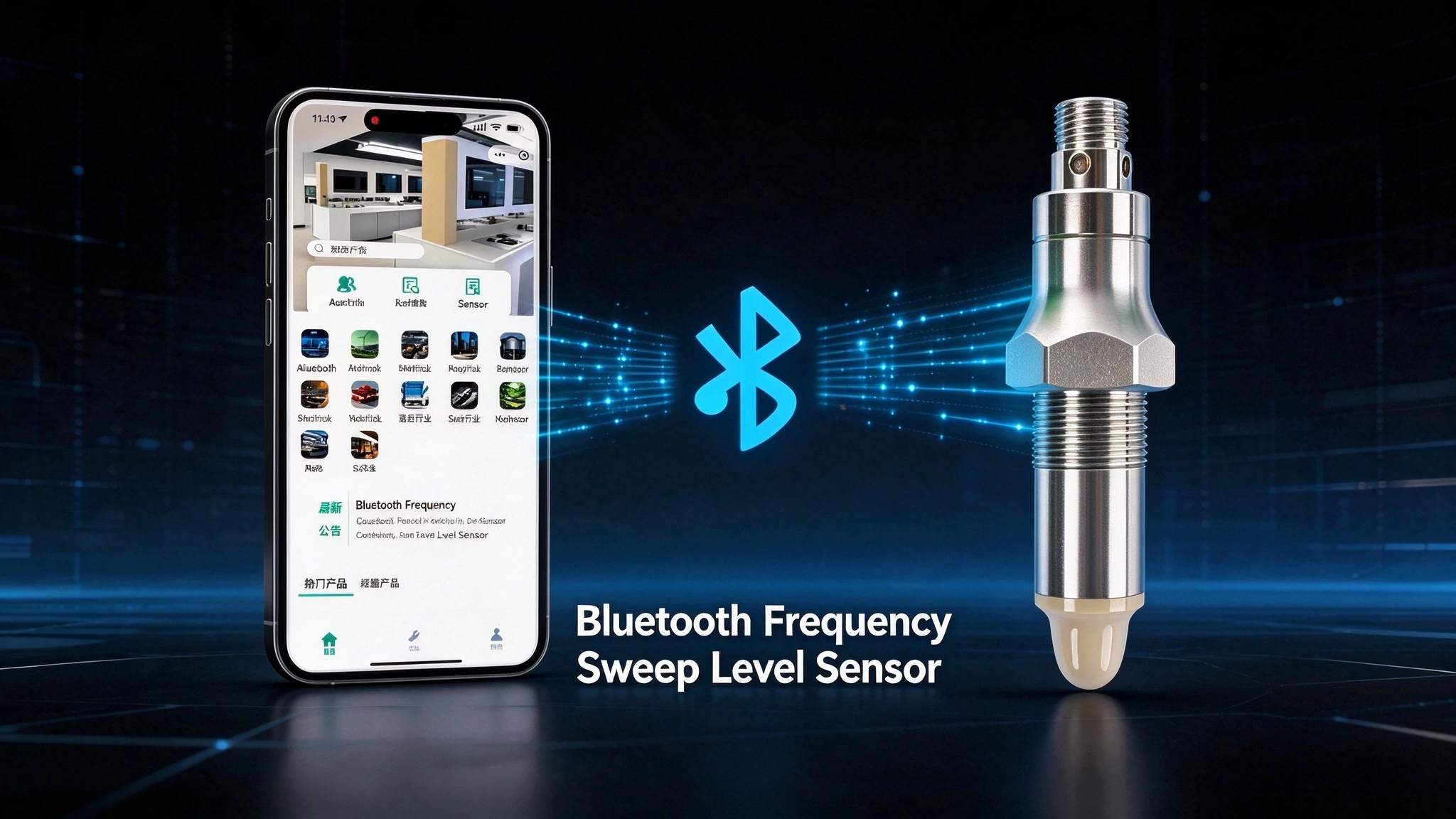
This is the Bluetooth swept-frequency level sensor.
Tiny as it looks, it keeps the entire chocolate production line running reliably.
Many assume level measurement simply checks how full or empty a tank is. For chocolate manufacturing, it is far trickier.
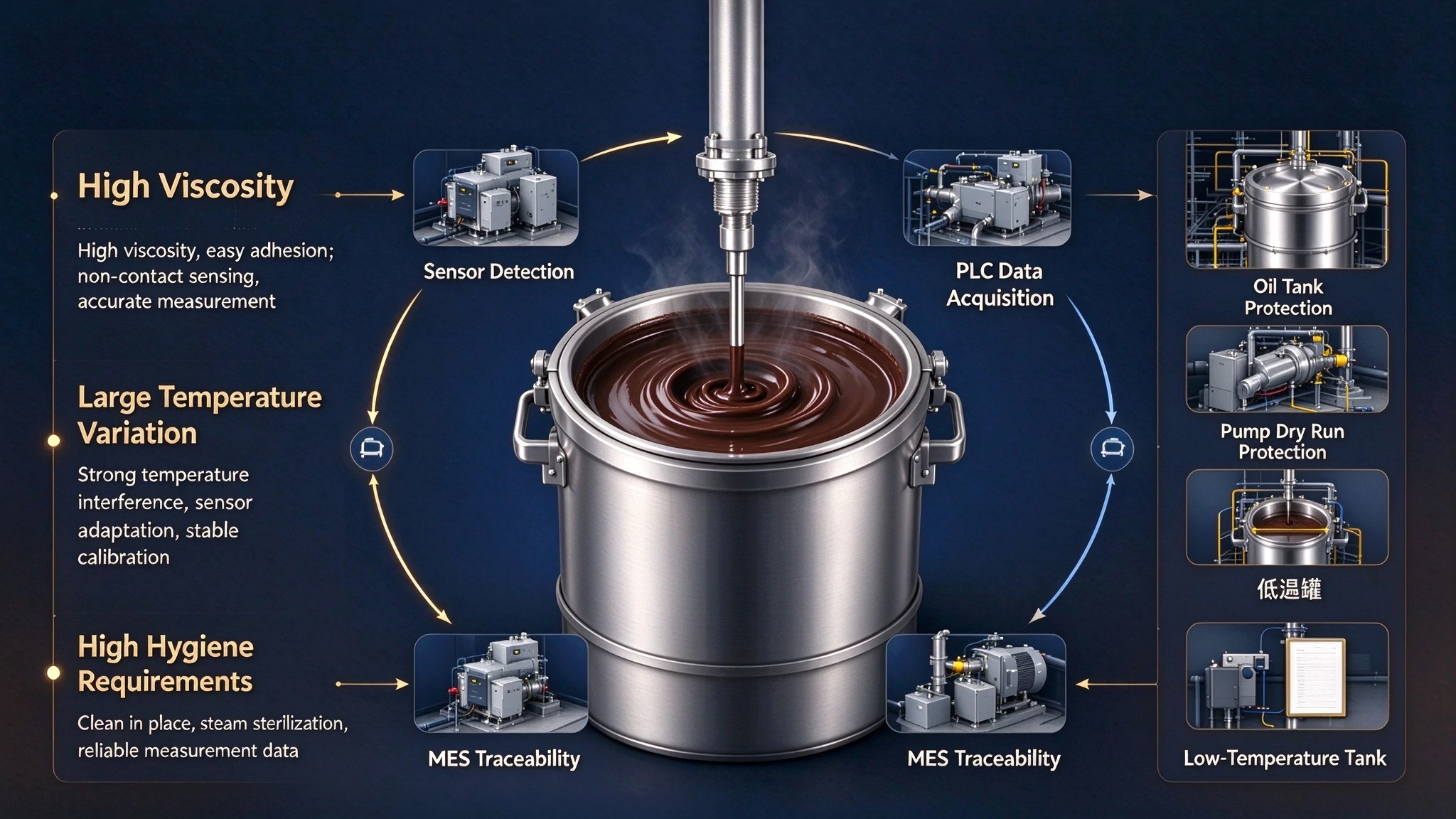
First, high stickiness. Molten chocolate has extremely high viscosity. Once temperature drops, it solidifies and clings firmly to sensor probes. Traditional capacitive and admittance sensors deliver distorted readings once coated by chocolate buildup, rendering measurements unreliable.
Second, drastic temperature swings. Temperatures vary from 45°C inside insulated tanks down to ambient room temperature. Such fluctuations shift dielectric constant readings and trigger false alarms.
Third, stringent hygiene standards. Food-grade components must comply with strict sanitary requirements: no dead pockets for residue buildup and easy cleaning.
A senior maintenance technician with ten years of chocolate plant experience told me a memorable line:
“When a sensor fails in other workshops, you just swap it out. Here, inaccurate level readings can ruin an entire batch of chocolate, or shut down the whole production line.”
This statement is no exaggeration. Chocolate production is continuous. Once tank level data drifts out of tolerance, downstream depositing, forming and packaging processes all collapse.
ELEsenson’s Bluetooth swept-frequency level sensor is built around one core principle: swept-frequency measurement.
Conventional sensors operate at one fixed frequency. Material coating and temperature drift throw the frequency off, leading to incorrect readings.
Swept-frequency technology works differently. Instead of locking onto a single frequency, it scans continuously across a frequency band to locate the true material resonance point.
Analogy: Traditional sensors are like listening for one single note while blindfolded. If the note shifts, they lose track. The swept-frequency sensor is equipped with a sensitive ear, scanning the full musical scale. It always finds the genuine resonance, no matter how much it drifts.
Three core benefits:
▸ Superior anti-sticking performance. Coating on the probe does not interfere. Swept-frequency technology automatically distinguishes residue stuck to the probe from actual material level to prevent false alarms.
▸ Minimal temperature impact. Frequency drift caused by temperature variation gets automatically compensated within the scanning range, delivering stable readings.
▸ Broad material compatibility. Works for thin slurries, pastes, granules and powders, as long as dielectric differences exist. No repeated recalibration required.
Technical specs must translate directly to tangible business value.
— Cut Material Waste —
Inaccurate level measurement causes two major losses: tank overflow and dry-run empty tanks. An overflow incident wastes dozens of kilograms of molten chocolate and requires hours of cleanup. Empty tanks are even worse: downstream pumps run dry, products suffer underfilling, and full line adjustments become mandatory.
The swept-frequency sensor achieves millimetre-level measurement accuracy, with nearly zero false high/low level alarms. One chocolate plant calculated the ROI: savings from eliminating overflow alone recover the sensor investment within six months.
— Lower Maintenance Costs —
How do factories handle coated traditional sensors? Dismantle and clean. Chocolate lines run 24/7. Removal, cleaning, reinstallation and recalibration take 2–3 hours of costly downtime.
Swept-frequency sensors rarely need disassembly. Chocolate residue on probes does not distort readings; standard CIP cleaning is sufficient. Maintenance cycles extend from weekly to every 3–6 months.
— Stabilise Product Quality —
Chocolate production demands tight control over temperature and tank level. Fluctuating levels create unstable pump feed pressure, leading to large weight deviations in moulded chocolate pieces.
Consistent level monitoring acts as the production line’s stabilising anchor. Better consistency in product weight reduces defect rates and customer complaints.
— Data Connectivity & Smart Factory Upgrade —
Many factories overlook this advantage initially but recognise its huge value later.
Elyiyi sensors support multiple output options and connect directly to factory PLC or MES systems. Real-time tank level data lets managers monitor vessel status from the office and enable predictive material replenishment and production scheduling.
Plants shift from manual patrols and paper logging to fully digitalised operations.
In industrial sensor sales, we often get asked: what makes your product stand out?
On datasheets, sensors look largely similar: stainless steel housings, level measurement, standard signal outputs.
The real difference reveals itself only after installation and three months of continuous line operation.
Some sensors run unattended, delivering steady data reliably. Others suffer reading drift and false alarms week after week, tying maintenance crews down in constant troubleshooting.
After years in sensor manufacturing, Elyiyi holds this belief: a great sensor should be the quiet worker on your factory floor.
It needs no frequent attention, no repeated calibration, no regular removal for scrubbing. It sits quietly atop your tank, precise, stable and dependable — like an invisible engineer safeguarding your production.
That is all it needs to do.
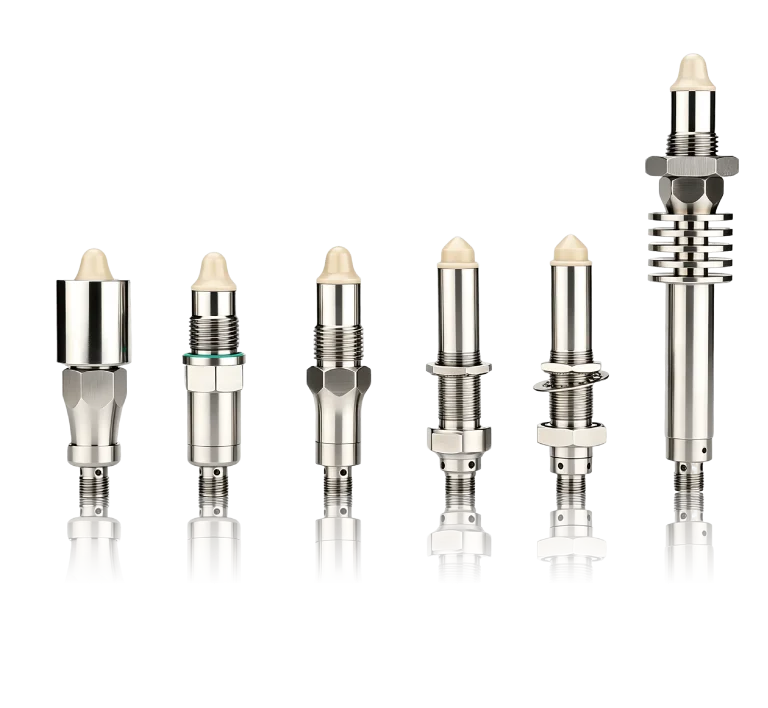

elesenson
ELEsenson is a company specializing in the research, development, production, and sales of sensor technology, located in Wenzhou, Zhejiang, China. Upholding the corporate philosophy of “striving for perfection and pursuing excellence,” the company is committed to providing precise and reliable sensor solutions to customers worldwide. The company boasts an experienced R&D team dedicated to the research and development of cutting-edge sensor technologies. ELEsenon not only prioritizes product quality but also places a strong emphasis on customer needs. Production strictly adheres to international quality management system standards, ensuring that every product meets or exceeds customer expectations. Moving forward, Zhejiang ELEsenon will continue to pursue technological innovation and uphold the principle of quality first, striving to become a global leader in the sensor industry and providing customers with superior products and attentive service.